Friday, February 27, 2015

In My TBR Stack:

Girl in a Band: A Memoir
By Kim Gordon 
Dey Street Books
Hardcover

From the publisher's website:

Kim Gordon, founding member of Sonic Youth, fashion icon, and role model for a generation of women, now tells her story—a memoir of life as an artist, of music, marriage, motherhood, independence, and as one of the first women of rock and roll, written with the lyricism and haunting beauty of Patti Smith's Just Kids.

Often described as aloof, Kim Gordon opens up as never before in Girl in a Band. Telling the story of her family, growing up in California in the '60s and '70s, her life in visual art, her move to New York City, the men in her life, her marriage, her relationship with her daughter, her music, and her band, Girl in a Band is a rich and beautifully written memoir.

Gordon takes us back to the lost New York of the 1980s and '90s that gave rise to Sonic Youth, and the Alternative revolution in popular music. The band helped build a vocabulary of music—paving the way for Nirvana, Hole, Smashing Pumpkins and many other acts. But at its core, Girl in a Band examines the route from girl to woman in uncharted territory, music, art career, what partnership means—and what happens when that identity dissolves.

Evocative and edgy, filled with the sights and sounds of a changing world and a transformative life, Girl in a Band is the fascinating chronicle of a remarkable journey and an extraordinary artist.


Thursday, February 26, 2015

On My Radar:

They Know Everything About You: How Data-Collecting Corporations and Snooping Government Agencies Are Destroying Democracy
Hardcover


They Know Everything About You is a groundbreaking exposé of how government agencies and tech corporations monitor virtually every aspect of our lives, and a fierce defense of privacy and democracy. 

The revelation that the government has access to a vast trove of personal online data demonstrates that we already live in a surveillance society. But the erosion of privacy rights extends far beyond big government. Intelligence agencies such as the NSA and CIA are using Silicon Valley corporate partners as their data spies. Seemingly progressive tech companies are joining forces with snooping government agencies to create a brave new world of wired tyranny. 

Life in the digital age poses an unprecedented challenge to our constitutional liberties, which guarantee a wall of privacy between the individual and the government. The basic assumption of democracy requires the ability of the individual to experiment with ideas and associations within a protected zone, as secured by the Constitution. The unobserved moment embodies the most basic of human rights, yet it is being squandered in the name of national security and consumer convenience. 

Robert Scheer argues that the information revolution, while a source of public enlightenment, contains the seeds of freedom’s destruction in the form of a surveillance state that exceeds the wildest dream of the most ingenious dictator. The technology of surveillance, unless vigorously resisted, represents an existential threat to the liberation of the human spirit.

Wednesday, February 25, 2015

In My TBR Stack:

Going into the City: Portrait of a Critic as a Young Man
by Robert Christgau
Dey Street Books
Hardcover

From the publisher's website:

One of our great essayists and journalists—the Dean of American Rock Critics, Robert Christgau—takes us on a heady tour through his life and times in this vividly atmospheric and visceral memoir that is both a love letter to a New York long past and a tribute to the transformative power of art.

Lifelong New Yorker Robert Christgau has been writing about pop culture since he was twelve and getting paid for it since he was twenty-two, covering rock for Esquire in its heyday and personifying the music beat at the Village Voice for over three decades. Christgau listened to Alan Freed howl about rock ‘n’ roll before Elvis, settled east of Manhattan’s Avenue B forty years before it was cool, witnessed Monterey and Woodstock and Chicago ’68, and the first abortion speak-out. He’s caught Coltrane in the East Village, Muddy Waters in Chicago, Otis Redding at the Apollo, the Dead in the Haight, Janis Joplin at the Fillmore, the Rolling Stones at the Garden, the Clash in Leeds, Grandmaster Flash in Times Square, and every punk band you can think of at CBGB.


Christgau chronicled many of the key cultural shifts of the last half century and revolutionized the cultural status of the music critic in the process. Going Into the City is a look back at the upbringing that grounded him, the history that transformed him, and the music, books, and films that showed him the way. Like Alfred Kazin’s A Walker in the City, E. B. White’s Here Is New York, Joseph Mitchell’s Up in the Old Hotel, and Patti Smith’s Just Kids, it is a loving portrait of a lost New York. It’s an homage to the city of Christgau’s youth from Queens to the Lower East Side—a city that exists mostly in memory today. And it’s a love story about the Greenwich Village girl who roamed this realm of possibility with him.

Tuesday, February 24, 2015

In My TBR Stack:

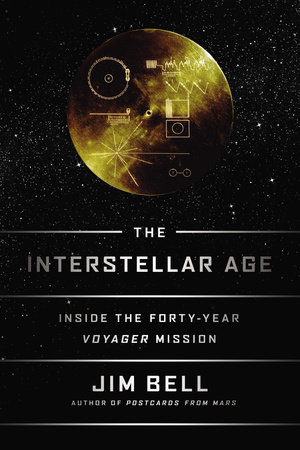
The Interstellar Age: Inside the Forty-Year Voyager Mission
by Jim Bell
Dutton Books
Hardcover

From the publisher's website:

The Voyager spacecraft are our farthest-flung emissaries—11.3 billion miles away from the crew who built and still operate them, decades since their launch.

Voyager 1 left the solar system in 2012; its sister craft, Voyager 2, will do so in 2015. The fantastic journey began in 1977, before the first episode of Cosmos aired. The mission was planned as a grand tour beyond the moon; beyond Mars, Jupiter, and Saturn; and maybe even into interstellar space. The fact that it actually happened makes this humanity’s greatest space mission.

In The Interstellar Age, award-winning planetary scientist Jim Bell reveals what drove and continues to drive the members of this extraordinary team, including Ed Stone, Voyager’s chief scientist and the one-time head of NASA’s Jet Propulsion Lab; Charley Kohlhase, an orbital dynamics engineer who helped to design many of the critical slingshot maneuvers around planets that enabled the Voyagers to travel so far;  and the geologist whose Earth-bound experience would prove of little help in interpreting the strange new landscapes revealed in the Voyagers’ astoundingly clear images of moons and planets.


Speeding through space at a mind-bending eleven miles a second, Voyager 1 is now beyond our solar system’s planets. It carries with it artifacts of human civilization. By the time Voyager passes its first star in about 40,000 years, the gold record on the spacecraft, containing various music and images including Chuck Berry’s “Johnny B. Goode,” will still be playable.

Monday, February 23, 2015

On My Radar:

Pretend You're in a War: The Who & the Sixties
by Mark Blake
Aurum Press Ltd.
Hardcover

From the book publicity:

Pete Townshend was once asked how he prepared himself for The Who's violent live performances. His answer? "Pretend you're in a war." For a band as prone to furious infighting as it was notorious for acts of 'auto-destructive art', this could have served as a motto. Between 1964 and 1969, The Who released some of the most dramatic and confrontational music of the decade, including 'I Can't Explain', 'My Generation' and 'I Can See For Miles'. This was a body of work driven by bitter rivalry, black humour and dark childhood secrets, but it also held up a mirror to a society in transition. Now, acclaimed rock biographer Mark Blake goes in search of its inspiration to present a unique perspective on both The Who and the sixties. From their breakthrough as Mod figureheads to the rise and fall of psychedelia, he reveals how The Who, in their explorations of sex, drugs, spirituality and class, refracted the growing turbulence of the time. He also lays bare the colourful but crucial role played by their managers, Kit Lambert and Chris Stamp. And - in the uneasy alliance between art-school experimentation and working-class ambition - he locates the motor of the Swinging Sixties. As the decade closed, with The Who performing Tommy in front of 500,000 people at the Woodstock Festival, the 'rock opera' was born. In retrospect, it was the crowning achievement of a band who had already embraced pop art and the concept album; who had pioneered the power chord and the guitar smash; and who had embodied - more so than any of their peers - the guiding spirit of the age: war.

Saturday, February 21, 2015

Now in Paperback:

The Signal and the Noise: Why Some Predictions Fail - but Some Don't
by Nate Silver
Penguin Books
Trade Paperback

From the publisher's website:

Nate Silver built an innovative system for predicting baseball performance, predicted the 2008 election within a hair’s breadth, and became a national sensation as a blogger—all by the time he was thirty. He solidified his standing as the nation's foremost political forecaster with his near perfect prediction of the 2012 election. Silver is the founder and editor in chief of FiveThirtyEight.com.

Drawing on his own groundbreaking work, Silver examines the world of prediction, investigating how we can distinguish a true signal from a universe of noisy data. Most predictions fail, often at great cost to society, because most of us have a poor understanding of probability and uncertainty. Both experts and laypeople mistake more confident predictions for more accurate ones. But overconfidence is often the reason for failure. If our appreciation of uncertainty improves, our predictions can get better too. This is the “prediction paradox”: The more humility we have about our ability to make predictions, the more successful we can be in planning for the future.

In keeping with his own aim to seek truth from data, Silver visits the most successful forecasters in a range of areas, from hurricanes to baseball, from the poker table to the stock market, from Capitol Hill to the NBA. He explains and evaluates how these forecasters think and what bonds they share. What lies behind their success? Are they good—or just lucky? What patterns have they unraveled? And are their forecasts really right? He explores unanticipated commonalities and exposes unexpected juxtapositions. And sometimes, it is not so much how good a prediction is in an absolute sense that matters but how good it is relative to the competition. In other cases, prediction is still a very rudimentary—and dangerous—science.

Silver observes that the most accurate forecasters tend to have a superior command of probability, and they tend to be both humble and hardworking. They distinguish the predictable from the unpredictable, and they notice a thousand little details that lead them closer to the truth. Because of their appreciation of probability, they can distinguish the signal from the noise.


With everything from the health of the global economy to our ability to fight terrorism dependent on the quality of our predictions, Nate Silver’s insights are an essential read.

Friday, February 20, 2015

On My Radar:

Spring Chicken: Stay Young Forever (Or Die Trying)
by Bill Gifford
Grand Central Publishing
Hardcover

From the publisher's website:

SPRING CHICKEN is a full-throttle, high-energy ride through the latest research, popular mythology, and ancient wisdom on mankind's oldest obsession: How can we live longer? And better? In his funny, self-deprecating voice, veteran reporter Bill Gifford takes readers on a fascinating journey through the science of aging, from the obvious signs like wrinkles and baldness right down into the innermost workings of cells. We visit cutting-edge labs where scientists are working to "hack" the aging process, like purging "senescent" cells from mice to reverse the effects of aging. He'll reveal why some people live past 100 without even trying, what has happened with resveratrol, the "red wine pill" that made headlines a few years ago, how your fat tissue is trying to kill you, and how it's possible to unlock longevity-promoting pathways that are programmed into our very genes. Gifford separates the wheat from the chaff as he exposes hoaxes and scams foisted upon an aging society, and arms readers with the best possible advice on what to do, what not to do, and what life-changing treatments may be right around the corner. 


An intoxicating mixture of deep reporting, fascinating science, and prescriptive takeaway, SPRING CHICKEN will reveal the extraordinary breakthroughs that may yet bring us eternal youth, while exposing dangerous deceptions that prey on the innocent and ignorant.

Thursday, February 19, 2015

In My TBR Stack:

Eye on the Struggle: Ethel Payne, the First Lady of the Black Press
by James McGrath Morris
Amistad Books / Harper Collins
Hardcover

From the publisher's website:

Acclaimed biographer James McGrath Morris brings into focus the riveting life of one of the most significant yet least known figures of the civil rights era—pioneering journalist Ethel Payne, the “First Lady of the Black Press”—elevating her to her rightful place in history at last.

For decades, Ethel Lois Payne has been hidden in the shadows of history. Now, James McGrath Morris skillfully illuminates this ambitious, influential, and groundbreaking woman’s life, from her childhood growing up in South Chicago to her career as a journalist and network news commentator, reporting on some of the most crucial events in modern American history.

Morris draws on a rich and untapped collection of Payne’s personal papers documenting her private and professional affairs. He combed through oral histories, FBI documents, and newspapers to fully capture Payne’s life, her achievements, and her legacy. He introduces us to a journalist who covered such events as the Montgomery Bus Boycott, the Little Rock school desegregation crisis, the service of black troops in Vietnam, and Henry Kissinger’s 26,000-mile tour of Africa.

A self-proclaimed “instrument of change” for her people, Payne broke new ground as the Washington correspondent for the Chicago Defender. She publicly prodded President Dwight D. Eisenhower to support desegregation, and her reporting on legislative and judicial civil rights battles enlightened and activated black readers across the nation. In 1964, President Lyndon B. Johnson recognized Payne’s seminal role by presenting her with a pen used in signing the Civil Rights Act. In 1972, she became the first female African American radio and television commentator on a national network, working for CBS. Her story mirrors the evolution of our own modern society.
Inspiring and instructive, moving and comprehensive, Eye on the Struggle illuminates this extraordinary woman and her achievements, and reminds us of the power one person has to transform our lives and our world.


With 16 pages of black-and-white photos.

Wednesday, February 18, 2015

On My Radar:

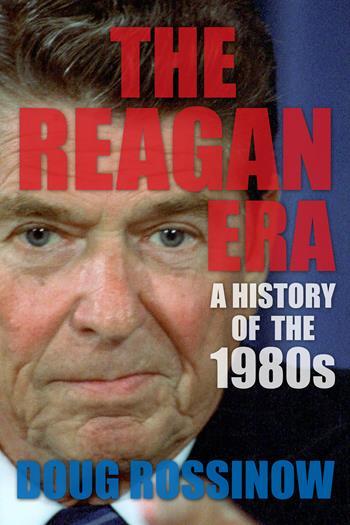
The Reagan Era: A History of the 1980s
by Doug Rossinow
Columbia University Press
Hardcover

From the publisher's website:

In this concise yet thorough history of America in the 1980s, Doug Rossinow takes the full measure of Ronald Reagan's presidency and the ideology of Reaganism. Believers in libertarian economics and a muscular foreign policy, Reaganite conservatives in the 1980s achieved impressive success in their efforts to transform American government, politics, and society, ushering in the political and social system Americans inhabit today.

Rossinow links current trends in economic inequality to the policies and social developments of the Reagan era. He reckons with the racial politics of Reaganism and its debt to the backlash generated by the civil rights movement, as well as Reaganism's entanglement with the politics of crime and the rise of mass incarceration. Rossinow narrates the conflicts that rocked U.S. foreign policy toward Central America, and he explains the role of the recession during the early 1980s in the decline of manufacturing and the growth of a service economy.


From the widening gender gap to the triumph of yuppies and rap music, from Reagan's tax cuts and military buildup to the celebrity of Michael Jackson and Madonna, from the era's Wall Street scandals to the successes of Bill Gates and Sam Walton, from the first "war on terror" to the end of the Cold War and the brink of America's first war with Iraq, this history, lively and readable yet sober and unsparing, gives readers vital perspective on a decade that dramatically altered the American landscape.

Tuesday, February 17, 2015

BookSpin Giveaway!

Golden State: A Novel
by Stephanie Kegan
Simon & Schuster
Hardcover

I have one copy of Golden State available for giveaway due to the kindness of Simon & Schuster. To be entered to win you need to retweet my tweets about the giveaway. My twitter name is @Book_Dude.  


From the publisher's website:

A haunting literary drama, with a ripped-from-the headlines urgency reminiscent of Defending Jacob and Sue Miller’s While I Was Gone, Golden State asks hard questions about the limits of loyalty and the bounds of family ties.

Growing up in the 1960s in one of California’s most prominent political families, Natalie Askedahl worshipped her big brother, Bobby, a sensitive math prodigy who served as her protector and confidante. But after Bobby left home at sixteen on a Princeton scholarship, something changed between them. Now that Natalie is happily married, with a career and two young daughters, her only real regret is losing Bobby.

Then, a bomb explodes in the middle of her seemingly ideal life. Her oldest daughter is on the Stanford campus when one person is killed and another maimed. Other bombings follow across California. Frightened for her family, Natalie grows obsessed with the case until she makes an unthinkable discovery: the bomber’s manifesto reads alarmingly like the last letter she has from Bobby.


Unsure of whom to sacrifice and whom to protect, Natalie is confronted with a terrible choice that will send her down a rabbit hole of confusion, lies, and betrayals. As her life splits irrevocably into before and after, she begins to learn that some of the most dangerous things in the world are the stories we tell ourselves.

Monday, February 16, 2015

On My Radar:

All the Wrong Places: A Life Lost and Found
by Philip Connors
W. W. Norton
Hardcover

I loved Philip Connors' book Fire Season.  I'm willing to bet this one is fantastic as well.


From the publisher's website:

The prize-winning author of Fire Season returns with the heartrending story of his troubled years before finding solace in the wilderness.
In his debut Fire Season, Philip Connors recounted with lyricism, wisdom, and grace his decade as a fire lookout high above remote New Mexico. Now he tells the story of what made solitude on the mountain so attractive: the years he spent reeling in the wake of a family tragedy.
At the age of twenty-three, Connors was a young man on the make. He'd left behind the Minnesota pig farm on which he'd grown up and the brother with whom he'd never been especially close. He had a magazine job lined up in New York City and a future unfolding exactly as he’d hoped. Then one phone call out of the blue changed everything. All the Wrong Places is a searingly honest account of the aftermath of his brother's shocking death, exploring both the pathos and the unlikely humor of a life unmoored by loss.

Beginning with the otherworldly beauty of a hot-air-balloon ride over the skies of Albuquerque and ending in the wilderness of the American borderlands, this is the story of a man paying tribute to the dead by unconsciously willing himself into all the wrong places, whether at the copy desk of the Wall Street Journal, the gritty streets of Bed-Stuy in the 1990s, or the smoking rubble of the World Trade Center. With ruthless clarity and a keen sense of the absurd, Connors slowly unmasks the truth about his brother and himself, to devastating effect. Like Cheryl Strayed's Wild, this is a powerful look back at wayward years—and a redemptive story about finding one's rightful home in the world.


Friday, February 13, 2015

In My TBR Stack:

American Reckoning: The Vietnam War and Our National Identity
by Christian G. Appy
Viking Books
Hardcover

From the publisher's website:

How did the Vietnam War change the way we think of ourselves as a people and a nation? Christian G. Appy, author of the widely praised oral history of the Vietnam War Patriots, now examines the relationship between the war’s realities and myths and its impact on our national identity, conscience, pride, shame, popular culture, and postwar foreign policy.


Drawing on a vast variety of sources from movies, songs, and novels to official documents, media coverage, and contemporary commentary, Appy offers an original interpretation of the war and its far-reaching consequences. Authoritative, insightful, sometimes surprising, and controversial, American Reckoning is a fascinating mix of political and cultural reporting that offers a completely fresh account of the meaning of the Vietnam War.


Thursday, February 12, 2015

On My Radar:

Dragnet Nation: A Quest for Privacy, Security, and Freedom in a World of Relentless Surveillance 
by Julia Angwin
St. Martin's Press
Trade Paperback

From the publisher's website:

An inside look at who’s watching you, what they know and why it matters. We are being watched.

We see online ads from websites we’ve visited, long after we’ve moved on to other interests. Our smartphones and cars transmit our location, enabling us to know what’s in the neighborhood but also enabling others to track us. And the federal government, we recently learned, has been conducting a massive data-gathering surveillance operation across the Internet and on our phone lines.

In Dragnet Nation, award-winning investigative journalist Julia Angwin reports from the front lines of America’s surveillance economy, offering a revelatory and unsettling look at how the government, private companies, and even criminals use technology to indiscriminately sweep up vast amounts of our personal data. In a world where we can be watched in our own homes, where we can no longer keep secrets, and where we can be impersonated, financially manipulated, or even placed in a police lineup, Angwin argues that the greatest long-term danger is that we start to internalize the surveillance and censor our words and thoughts, until we lose the very freedom that makes us unique individuals. Appalled at such a prospect, Angwin conducts a series of experiments to try to protect herself, ranging from quitting Google to carrying a “burner” phone, showing how difficult it is for an average citizen to resist the dragnets’ reach.


Her book is a cautionary tale for all of us, with profound implications for our values, our society, and our very selves.