Showing posts with label Harper Books. Show all posts

Wednesday, June 29, 2022

On My Radar:

Why We Did It: A Travelogue from the Republican Road to Hell 

by Tim Miller

Harper Books

Hardcover


From the publisher's website:


As one of the strategists behind the famous 2012 RNC “autopsy,” Miller conducts his own forensic study on the pungent carcass of the party he used to love, cutting into all the hubris, ambition, idiocy, desperation, and self-deception for everyone to see. In a bracingly honest reflection on both his own past work for the Republican Party and the contortions of his former peers in the GOP establishment, Miller draws a straight line between the actions of the 2000s GOP to the Republican political class's Trumpian takeover, including the horrors of January 6th.

From ruminations on the mental jujitsu that allowed him as a gay man to justify becoming a hitman for homophobes, to astonishingly raw interviews with former colleagues who jumped on the Trump Train, Miller diagrams the flattering and delusional stories GOP operatives tell themselves so they can sleep at night. With a humorous touch he reveals Reince Priebus' neediness, Sean Spicer's desperation, Elise Stefanik and Chris Christie’s raw ambition, and his close friends’ submission to a MAGA psychosis.

Why We Did It is a vital, darkly satirical warning that all the narcissistic justifications that got us to this place still thrive within the Republican party, which means they will continue to make the same mistakes and political calculations that got us here, with disastrous consequences for the nation.


Saturday, June 11, 2022

In My TBR Stack:

The Spy Who Knew Too Much: An Ex-CIA Officer's Quest Through a Legacy of Betrayal

by Howard Blum

Harper Books

Hardcover


From the publisher's website:


On a sunlit morning in September 1978, a sloop drifts aimlessly across the Chesapeake Bay. The cabin reveals signs of a struggle, and “classified” documents, live 9 mm cartridges, and a top-secret “burst” satellite communications transmitter are discovered aboard. But where is the boat’s owner, former CIA officer John Paisley? 

One man may hold the key to finding out. Tennent “Pete” Bagley was once a rising star in America’s spy aristocracy, and many expected he’d eventually become CIA director. But the star that burned so brightly exploded when Bagley—who suspected a mole had burrowed deep into the agency’s core—was believed himself to be the mole. After a year-long investigation, Bagley was finally exonerated, but the accusations tarnished his reputation and tainted his career. 

When Bagley’s daughter Christina, a CIA analyst, married another intelligence officer who was the son of the man who had played a key role in the investigation into Bagley, it caused a painful rift between the two. But then came Paisley’s strange death. A murder? Suicide? Or something else? Pete, now a retired spy, launches his own investigation that takes him deep into his own past and his own longtime hunt for a mole. What follows is a relentless pursuit to solve a spy story—and an inspiring tale of a man reclaiming his reputation and his family. It’s a very personal quest that leads to a shocking conclusion.

The Spy Who Knew Too Much includes 8 pages of black-and-white photographs.

Tuesday, February 22, 2022

On My Radar:


The Year That Broke America: An Immigration Crisis, a Terrorist Conspiracy, the Summer of Survivor, a Ridiculous Fake Billionaire, a Fight for Florida, and the 537 Votes That Changed Everything
Hardcover


Before there was Coronavirus, before there was the contentious 2020 election or the entire Trump presidency, there was a turning-point year that proved momentous and transformative for American politics and the fate of the nation. That year was 2000, the last year of America’s unchallenged geopolitical dominance, the year Mark Burnett created Survivor and a new form of celebrity, the year a little Cuban immigrant became the focus of a media circus, the year Donald Trump flirted with running for President (and failed miserably), the year a group of Al Qaeda operatives traveled to America to learn to fly planes. They all converged in Florida, where that fall, the most important presidential election in generations was decided by the slimmest margin imaginable. 

But the year 2000 was also the moment when the authority of the political system was undermined by technical malfunctions;  when the legal system was compromised by the justices of the Supreme Court; when the financial system was devalued by deregulation, speculation, creative securitization, and scam artistry; when the mainstream news media was destabilized by the propaganda power of Fox News and the supercharged speed of the internet; when the power of tastemakers, gatekeepers, and cultural elites was diminished by a dawning recognition of its irrelevance.

Expertly synthesizing many hours of interviews, court records, FOIA requests, and original archival research, Andrew Rice marshals an impressive cast of dupes, schmucks, superstars, politicians, and shameless scoundrels in telling the fascinating story of this portentous year that marked a cultural watershed. Back at the start of the new millennium it was easy to laugh and roll our eyes about the crazy events in Florida in the year 2000—but what happened then and there has determined where we are and who we’ve become.  


Sunday, January 16, 2022

On My Radar:

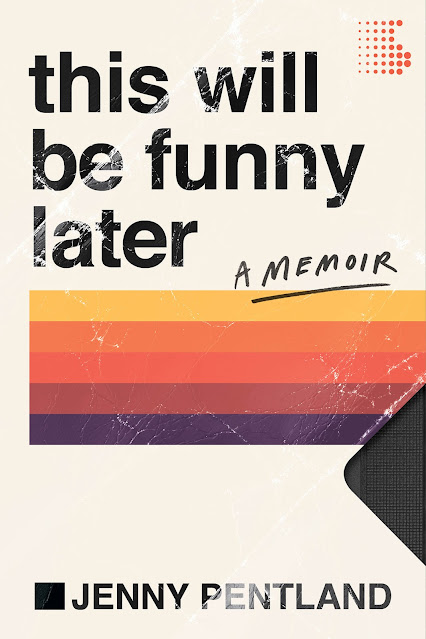
This Will Be Funny Later
by Jenny Pentland
Harper Books
Hardcover


From the publisher's website:


Growing up, Jenny Pentland’s life was a literal sitcom. Many of the storylines for her mother’s smash hit series, Roseanne, were drawn from Pentland’s early family life in working-class Denver. But that was only the beginning of the drama. Roseanne Barr’s success as a comedian catapulted the family from the Rockies to star-studded Hollywood—with its toxic culture of money, celebrity, and prying tabloids that was destabilizing for a child in grade school.

By adolescence, Jenny struggled with anxiety and eating issues. Her parents and new stepfather, struggling to help, responded by sending Jenny and her siblings on a grand tour of the self-help movement of the ’80s—from fat camps to brat camps, wilderness survival programs to drug rehab clinics (even though Jenny didn’t take drugs). Becoming an adult, all Jenny wanted was to get married and have kids, despite Roseanne’s admonishments not to limit herself to being just a wife and mother.

In this scathingly funny and moving memoir, Pentland reveals what it’s like to grow up as the daughter of a television star and how she navigated the turmoil, eventually finding her own path. Now happily married and raising five sons on a farm, Pentland has worked tirelessly to create the stable family she never had, while coming to terms at last with her deep-seated anxiety.

This Will Be Funny Later is a darkly funny and frank chronicle of transition, from childhood to adulthood and motherhood—one woman’s journey to define herself and create the life she always wanted.

Tuesday, March 23, 2021

On My Radar:

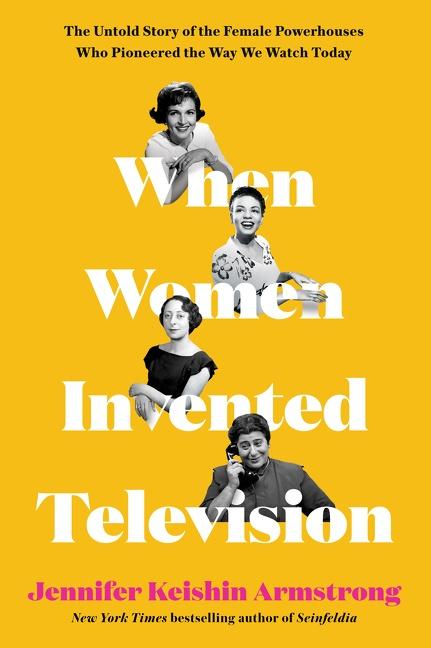
When Women Invented Television: The Untold Story of the Female Powerhouses Who Pioneered the Way We Watch Today
by Jennifer Keishin Armstrong
Harper Books
Hardcover


From the publisher's website:


It was the Golden Age of Radio and powerful men were making millions in advertising dollars reaching thousands of listeners every day. When television arrived, few radio moguls were interested in the upstart industry and its tiny production budgets, and expensive television sets were out of reach for most families. But four women—each an independent visionary— saw an opportunity and carved their own paths, and in so doing invented the way we watch tv today.


Irna Phillips turned real-life tragedy into daytime serials featuring female dominated casts. Gertrude Berg turned her radio show into a Jewish family comedy that spawned a play, a musical, an advice column, a line of house dresses, and other products. Hazel Scott, already a renowned musician, was the first African American to host a national evening variety program. Betty White became a daytime talk show fan favorite and one of the first women to produce, write, and star in her own show.


Together, their stories chronicle a forgotten chapter in the history of television and popular culture.


But as the medium became more popular—and lucrative—in the wake of World War II, the House Un-American Activities Committee arose to threaten entertainers, blacklisting many as communist sympathizers. As politics, sexism, racism, anti-Semitism, and money collided, the women who invented television found themselves fighting from the margins, as men took control. But these women were true survivors who never gave up—and thus their legacies remain with us in our television-dominated era. It's time we reclaimed their forgotten histories and the work they did to pioneer the medium that now rules our lives.

This amazing and heartbreaking history, illustrated with photos, tells it all for the first time. 


Friday, March 19, 2021

On My Radar:

So Many Ways to Lose: The Amazin' True Story of the New York Mets — the Best Worst Team in Sports
by Devin Gordon
Harper Books
Hardcover


From the publisher's website:


In So Many Ways to Lose, author and lifelong Mets fan Devin Gordon sifts through the detritus of Queens for a baseball history like no other. Remember the time the Mets lost an All-Star after he got charged by a wild boar? Or the time they blew a six-run ninth-inning lead at the peak of a pennant race? Or the time they fired their manager before he ever managed a game? Sure you do. It was only two years ago, and it was all in the same season. The Mets have an unrivaled gift for getting it backward, doing the impossible, snatching victory from the jaws of defeat, and then snatching defeat right back again.  

And yet, just ask any Mets fan: amazing and/or miraculous postseason runs are as much a part of our team's identity as losing 120 games in 1962. The DNA of seasons like 1969, the original Miracle Mets, and the 1973 “Ya Gotta Believe” Mets, who went from last place to Game 7 of the World Series in two months, and the powerhouse 1986 Mets, has encoded in us this hapless instinct that a reversal of fortune is always possible. It’s happened before. It’s kind of our thing. And now we've got Steve Cohen's hedge-fund billions to play with! What could go wrong?

In this hilarious history of the Mets and love letter to the art of disaster, Devin Gordon presents baseball the way it really is, not in the wistful sepia tones we've come to expect from other sportswriters. Along the way, he explains the difference between being bad and being gifted at losing, and why this distinction holds the key to understanding the true amazin’ magic of the New York Mets. 

Thursday, August 13, 2020

On My Radar:

The Madman Theory: Trump Takes on the World
by Jim Sciutto
Harper Books
Hardcover

From the publisher's website:


Richard Nixon tried it first. Hoping to make communist bloc countries uneasy and thus unstable, Nixon let them think he was just crazy enough to nuke them. He called this “the madman theory.” Nearly half a century later, President Trump has employed his own “madman theory,” sometimes intentionally and sometimes not.

Trump praises Kim Jong-un and their “love notes,” admires and flatters Vladimir Putin, and gives a greenlight to Recep Tayyip Erdogan to invade Syria. Meanwhile, he attacks US institutions and officials, ignores his own advisors, and turns his back on US allies from Canada and Mexico to NATO to Ukraine to the Kurds at war with ISIS. Trump is willing to make the nation’s most sensitive and consequential decisions while often ignoring the best information and intelligence available to him. He continually catches the world off guard, but is it working?

In The Madman Theory, Jim Sciutto shows how Trump's supporters assume he has a strategy for long-term success – that he is somehow playing three-dimensional chess. Now that we are four years into his presidency, we can see his unpredictable focus on short-term headlines has in fact lead to predictably mediocre results in the short and long run.  Trump’s foreign policy has undermined American values and national security interests, while hurting allies who have been on our side for decades, leaving them isolated and vulnerable without American support. 

Meanwhile, he comforts and emboldens our enemies. The White House’s revolving door of staff demonstrates that Trump has no real plan; all serious policymakers—and those who would be a check on his most destructive impulses—have been exiled or jumped ship.

Sciutto has interviewed a wide swath of current and former administration officials to assemble the first comprehensive portrait of the impact of Trump’s erratic foreign policy. Smart, authoritative, and compelling, The Madman Theory is the definitive take on Trump’s calamitous legacy around the globe, showing how his proclivity for chaos is creating a world which is more unstable, violent, and impoverished than it was before.

Tuesday, May 26, 2020

On My Radar:

How Did We Get Here? From Theodore Roosevelt to Donald Trump
by Robert Dallek
Harper Books
Hardcover

From the publisher's website:

The struggle to preserve the Republic has never been easy or without perils. The rise of conflicting political parties, which the founders opposed, and President John Adams’ Alien and Sedition Acts repressing First Amendment rights made Franklin’s observation at the conclusion of the Constitutional Convention—“a republic, if you can keep it”—seem prescient.
In the twentieth century, America endured numerous struggles: economic depression, World War II, McCarthyism, the Vietnam War, Watergate, the Iran-contra scandal, the war in Iraq—all of which gave rise to demagogues, as did the growth and reach of mass media. But this wasn’t the Founding Fathers’ vision for our leadership. The resistance to putting a demagogue in the White House survived the anti-Communist agitation of the 1950s and the Vietnam War in the 1960s. But the latter opened the way for Richard Nixon’s election in 1968 and Watergate, which again tested our democratic institutions and the rule of law. Nixon’s resignation in August 1974 moved Vice President Gerald Ford, his successor, to declare, “My fellow Americans, our long national nightmare is over.”
But was it? Donald Trump’s 2016 election has presented a new challenge. How did past politics and presidential administrations pave the way for this current assault on American democracy? Our nation’s history provides reassurance that we will restore our better angels to government. Yet it must be considered that earlier administrations and public outlook facilitated the rise of such an un-presidential character as Trump in the first place. In How Did We Get Here?, Robert Dallek considers a century of modern administrations, from Teddy Roosevelt to today, shining a light on the personalities behind the politics and the voters who elected each. His cautionary tale reminds us that the only constant in history is change, but whether for good or ill the choice is Americans’ to make. 

Thursday, February 27, 2020

Currently Reading:

The Big Lie: A Jack Swyteck Novel
by James Grippando
Harper
Hardcover

From the publisher's website:

The country is reeling. For the sixth time in American history, the winner of the popular vote will not occupy the Oval Office. President Malcolm MacLeod, the Machiavellian incumbent, was spared from impeachment only because his political foes were certain they would oust him at the ballot box. Now, he appears to have secured a second term, thanks to a narrow victory in the Electoral College. 
His opponent, Florida Senator Evan Stahl, saw his campaign rocked by allegations of an extramarital affair—with another man. Despite the salacious headline-making scandal and the surrounding media frenzy, most Americans chose Stahl to lead the politically polarized nation. But Stahl is refusing to concede. Backed by millions of supporters, he looks to individual members of the Electoral College to cross party lines.
Gun lobbyist Charlotte Holmes is one of Floridas twenty-nine electors who is bound by law and by oath to cast her vote for MacLeod, who won Florida by the thinnest of margins. When Charlotte announces that she intends to vote her conscience and throw the Electoral College to Stahl, the president and his Florida machine haul her into court on felony charges—which, for some, isn’t nearly punishment enough.
Miami attorney Jack Swyteck is going to use every legal maneuver he can to keep his new client free—and alive. MacLeod’s hand-picked prosecutor is determined to prove Charlotte is unfit to cast a vote. Dredging through her past, he’s looking for skeletons to humiliate and discredit her, while others with far deadlier intentions have begun acting on their threats. 
As the pressure mounts, Charlotte and Jack must decide how far they’ll go to stand their ground in the stand-your-ground state.

Monday, January 27, 2020

On My Radar:

Early: An Intimate History of Premature Birth and What It Teaches Us About Being Human
by Sarah DiGregorio
Harper Books
Hardcover

From the publisher's website:

The heart of many hospitals is the Neonatal Intensive Care Unit (NICU). It is a place where humanity, ethics, and science collide in dramatic and deeply personal ways as parents, doctors, and nurses grapple with sometimes unanswerable questions: When does life begin? When and how should life end? And what does it mean to be human?
Nearly twenty years ago, Dr. John D. Lantos wrote The Lazarus Case, a seminal work on ethical dilemmas in neonatology. He described the NICU as “a strong, strange, powerful place.” The NICU is a place made of stories—the stories of mothers and babies who spend days, weeks, and even months waiting to go home, and the dedicated clinicians who care for these tiny, developing humans. The book explores the evolution of neonatology and its breakthroughs—how modern medicine can be successful at saving infants at five and a half months gestation who weigh less than a pound, when only a few decades ago, there were essentially no treatments for premature babies.
For the first time, Sarah DiGregorio tells the complete story of this science—and the many people it has touched. Weaving her own story, those of other parents, and NICU clinicians with deeply researched reporting, Early delves deep into the history and future of neonatology, one of the most boundary pushing medical disciplines: how it came to be, how it is evolving, and the political, cultural, and ethical issues that continue to arise in the face of dramatic scientific developments. 
Eye-opening and vital, Early uses premature birth as a lens to view our own humanity, and the humanity of those around us.

Thursday, October 31, 2019

On My Radar:

The Survivors: A Story of War, Inheritance, and Healing
by Adam Frankel
Harper
Hardcover

From the publisher's website:

Adam Frankel’s maternal grandparents survived the Holocaust and built new lives, with new names, in Connecticut. Though they tried to leave the horrors of their past behind, the pain they suffered crossed generational lines—a fact most apparent in the mental health of Adam’s mother. When Adam sat down with her to examine their family history in detail, he learned another shocking secret, this time one that unraveled Adam’s entire understanding of who he is. 
In the midst of piecing together a story of inherited familial trauma, Adam discovered he was only half of who he thought he was, knowledge that raised essential questions of identity. Who was he, if not his father’s son? If not part of a rich heritage of writers and public servants? Does it matter? What defines a family’s bonds? What will he pass on to his own children? To rewrite his story in truth and to build a life for his own young family, Adam had to navigate his pain to find answers and a way forward.
Throughout this journey into the past, his family’s psyche, and his own understanding of identity, Adam comes to realize that while the nature of our families’ traumas may vary, each of us is faced with the same choice. We can turn away from what we’ve inherited—or, we can confront it, in the hopes of moving on and stopping that trauma from inflicting pain on future generations. The stories Adam shares with us in The Survivors are about the ways the past can haunt our future, the resilience that can be found on the other side of trauma, and the good that can come from things that are unspeakably bad.

Sunday, October 13, 2019

In My TBR Stack:

The Contender: The Story of Marlon Brando
by William J. Mann
Harper Books
Hardcover

From the publisher's website:

The most influential movie actor of his era, Marlon Brando changed the way other actors perceived their craft. His approach was natural, honest, and deeply personal, resulting in performances—most notably in A Streetcar Named Desire and On the Waterfront—that are without parallel. Brando was heralded as the American Hamlet—the Yank who surpassed British stage royalty Laurence Olivier, John Gielgud, and Ralph Richardson as the standard of greatness in the mid-twentieth century. 
Brando’s impact on American culture matches his professional significance; he both challenged and codified our ideas of masculinity and sexuality. Brando was also one of the first stars to use his fame as a platform to address social, political, and moral issues, courageously calling out America’s deeply rooted racism.
William Mann’s brilliant biography of the Hollywood legend illuminates this culture icon for a new age. Mann astutely argues that Brando was not only a great actor but also a cultural soothsayer, a Cassandra warning us about the challenges to come. Brando’s admonitions against the monetization of nearly every aspect of the culture were prescient. His public protests against racial segregation and discrimination at the height of the Civil Rights movement—getting himself arrested at least once—were criticized as being needlessly provocative. Yet those actions of fifty years ago have become a model many actors follow today.
Psychologically astute and masterfully researched, based on new and revelatory material, The Contender explores the star and the man in full, including the childhood traumas that reverberated through his professional and personal life. It is a dazzling biography of our nation’s greatest actor that is sure to become an instant classic.
The Contender includes sixteen pages of photographs.

Tuesday, September 24, 2019

On My Radar:

Inside Out: A Memoir
by Demi Moore
Harper Books
Hardcover

From the publisher's website:

For decades, Demi Moore has been synonymous with celebrity. From iconic film roles to high-profile relationships, Moore has never been far from the spotlight—or the headlines.
Even as Demi was becoming the highest paid actress in Hollywood, however, she was always outrunning her past, just one step ahead of the doubts and insecurities that defined her childhood. Throughout her rise to fame and during some of the most pivotal moments of her life, Demi battled addiction, body image issues, and childhood trauma that would follow her for years—all while juggling a skyrocketing career and at times negative public perception. As her success grew, Demi found herself questioning if she belonged in Hollywood, if she was a good mother, a good actress—and, always, if she was simply good enough.
As much as her story is about adversity, it is also about tremendous resilience. In this deeply candid and reflective memoir, Demi pulls back the curtain and opens up about her career and personal life—laying bare her tumultuous relationship with her mother, her marriages, her struggles balancing stardom with raising a family, and her journey toward open heartedness. Inside Out is a story of survival, success, and surrender—a wrenchingly honest portrayal of one woman's at once ordinary and iconic life.

Monday, September 9, 2019

In My TBR Stack:

If You Lived Here You'd Be Home By Now: Why We Traded the Commuting Life For a Little House on the Prairie
by Christopher Ingraham
Harper Books
Hardcover

From the publisher's website:

Like so many young American couples, Chris Ingraham and his wife Briana were having a difficult time making ends meet as they tried to raise their twin boys in the East Coast suburbs.  One day, Chris – in his role as a “data guy” reporter at the Washington Post – stumbled on a study that would change his life.  It was a ranking of America’s 3,000+ counties from ugliest to most scenic. He quickly scrolled to the bottom of the list and gleefully wrote the words “The absolute worst place to live in America is (drumroll please) … Red Lake County, Minn.” The story went viral, to put it mildly.  
Among the reactions were many from residents of Red Lake County.  While they were unflappably polite – it’s not called “Minnesota Nice” for nothing – they challenged him to look beyond the spreadsheet and actually visit their community. Ingraham, with slight trepidation, accepted.   Impressed by the locals’ warmth, humor and hospitality – and ever more aware of his financial situation and torturous commute – Chris and Briana eventually decided to relocate to the town he’d just dragged through the dirt on the Internet.
If You Lived Here You’d Be Home by Now is the story of making a decision that turns all your preconceptions – good and bad -- on their heads.  In Red Lake County, Ingraham experiences the intensity and power of small-town gossip, struggles to find a decent cup of coffee, suffers through winters with temperatures dropping to forty below zero, and unearths some truths about small-town life that the coastal media usually miss. It’s a wry and charming tale – with data! -- of what happened to one family brave enough to move waaaay beyond its comfort zone.

Thursday, April 4, 2019

In My TBR Stack:

So You're Going Bald!
by Julius Sharpe
Harper Books
Hardcover

From the publisher's website:

Educational, uplifting, and thoroughly hilarious, this rollicking “bald memoir” is a one-stop guide to appreciating life as you lose your hair, and offers dating, grooming, marriage, sex, and even toupee advice for bald men and the people who claim to love them.

Humorist and comedy television writer Julius Sharpe woke up on 9/11 to his own personal disaster: his hair was falling out. So You’re Going Bald is his hilarious odyssey—a tale filled with despair, horror, acceptance, and humor that everyone can relate to, whether you’re nineteen or approaching ninety—or are simply bald-curious.
As Julius tells it, going bald is for-real traumatic. Losing his hair preoccupied his days and kept him up Googling every night for five straight years. He suffered in private, but now he’s making it his mission that no cue ball will live alone with the agony of hair loss ever again. Sharpe examines what it means to be hairless up top, and walks you through how to look at yourself in the mirror and not want to die. He outlines the three stages of baldness (anger, more anger, even more anger), and volunteers himself as a guinea pig, testing laser helmets, plugs, and toupees. So You’re Going Bald is one-part tough love and one-part inspiration . . . the same way that Fran Drescher’s Cancer Schmancer inspired a cure for schmancer.
We all know someone who is bald, or going bald, or got their hair cut way too short. In So You’re Going Bald, Sharper provides an emotional roadmap for living life in the bald lane, giving voice to what it feels like to know that “grass doesn’t grow on a busy street.”


Tuesday, October 30, 2018

In My TBR Stack:

Year of Wonder: Classical Music to Enjoy Day by Day
by Clemency Burton-Hill
Harper Books
Hardcover

From the publisher's website:

Classical music has a reputation for being stuffy, boring, and largely inaccessible, but Burton-Hill is here to change that. An award-winning writer, broadcaster and musician, with a deep love of the art form she wants everyone to feel welcome at the classical party, and her desire to share her passion for its diverse wonders inspired this unique, enlightening, and expertly curated treasury. As she says, “The only requirements for enjoying classical music are open ears and an open mind.” 
Year of Wonder introduces readers to one piece of music each day of the year, artfully selected from across genres, time periods, and composers. Burton-Hill offers short introductions to contextualize each piece, and makes the music come alive in modern and playful ways. From Bach, Beethoven, Mozart, and Puccini to George Gershwin, Clara Schumann, Philip Glass, Duke Ellington, and many remarkable yet often-overlooked voices, Burton-Hill takes us on a dazzling journey through our most treasured musical landscape. 
Thoughtfully curated and masterfully researched, Year of Wonderis a book of classical music for everyone. Whether you’re a newcomer or an aficionado, Burton-Hill’s celebration will inspire, nourish, and enrich your life in unexpected ways.


Tuesday, October 16, 2018

On My Radar;

The Big Fella: Babe Ruth and the World He Created
by Jane Leavy
Harper Collins
Hardcover

From the publisher's website:

From Jane Leavy, the award-winning, New York Times bestselling author of The Last Boy and Sandy Koufax, comes the definitive biography of Babe Ruth—the man Roger Angell dubbed "the model for modern celebrity."
He lived in the present tense—in the camera’s lens. There was no frame he couldn’t or wouldn’t fill. He swung the heaviest bat, earned the most money, and incurred the biggest fines. Like all the new-fangled gadgets then flooding the marketplace—radios, automatic clothes washers, Brownie cameras, microphones and loudspeakers—Babe Ruth "made impossible events happen." Aided by his crucial partnership with Christy Walsh—business manager, spin doctor, damage control wizard, and surrogate father, all stuffed into one tightly buttoned double-breasted suit—Ruth drafted the blueprint for modern athletic stardom.
His was a life of journeys and itineraries—from uncouth to couth, spartan to spendthrift, abandoned to abandon; from Baltimore to Boston to New York, and back to Boston at the end of his career for a finale with the only team that would have him. There were road trips and hunting trips; grand tours of foreign capitals and post-season promotional tours, not to mention those 714 trips around the bases.
After hitting his 60th home run in September 1927—a total that would not be exceeded until 1961, when Roger Maris did it with the aid of the extended modern season—he embarked on the mother of all barnstorming tours, a three-week victory lap across America, accompanied by Yankee teammate Lou Gehrig. Walsh called the tour a "Symphony of Swat." The Omaha World Heraldcalled it "the biggest show since Ringling Brothers, Barnum and Bailey, and seven other associated circuses offered their entire performance under one tent." In The Big Fella, acclaimed biographer Jane Leavy recreates that 21-day circus and in so doing captures the romp and the pathos that defined Ruth’s life and times. 
Drawing from more than 250 interviews, a trove of previously untapped documents, and Ruth family records, Leavy breaks through the mythology that has obscured the legend and delivers the man.


Tuesday, August 7, 2018

In My TBR Stack:

Reader, Come Home: The Reading Brain in a Digital World
by Maryanne Wolf
Harper Books
Hardcover

From the publisher's website:

From the author of Proust and the Squid, a lively, ambitious, and deeply informative epistolary book that considers the future of the reading brain and our capacity for critical thinking, empathy, and reflection as we become increasingly dependent on digital technologies.
A decade ago, Maryanne Wolf’s Proust and the Squid revealed what we know about how the brain learns to read and how reading changes the way we think and feel. Since then, the ways we process written language have changed dramatically with many concerned about both their own changes and that of children. New research on the reading brain chronicles these changes in the brains of children and adults as they learn to read while immersed in a digitally dominated medium.
Drawing deeply on this research, this book comprises a series of letters Wolf writes to us—her beloved readers—to describe her concerns and her hopes about what is happening to the reading brain as it unavoidably changes to adapt to digital mediums. Wolf raises difficult questions, including:

  • Will children learn to incorporate the full range of "deep reading" processes that are at the core of the expert reading brain?
  • Will the mix of a seemingly infinite set of distractions for children’s attention and their quick access to immediate, voluminous information alter their ability to think for themselves?
  • With information at their fingertips, will the next generation learn to build their own storehouse of knowledge, which could impede the ability to make analogies and draw inferences from what they know?
  • Will all these influences, in turn, change the formation in children and the use in adults of "slower" cognitive processes like critical thinking, personal reflection, imagination, and empathy that comprise deep reading and that influence both how we think and how we live our lives?
  • Will the chain of digital influences ultimately influence the use of the critical analytical and empathic capacities necessary for a democratic society?
  • How can we preserve deep reading processes in future iterations of the reading brain?
  • Who are the "good readers" of every epoch?

Concerns about attention span, critical reasoning, and over-reliance on technology are never just about children—Wolf herself has found that, though she is a reading expert, her ability to read deeply has been impacted as she has become, inevitably, increasingly dependent on screens.
Wolf draws on neuroscience, literature, education, technology, and philosophy and blends historical, literary, and scientific facts with down-to-earth examples and warm anecdotes to illuminate complex ideas that culminate in a proposal for a biliterate reading brain. Provocative and intriguing, Reader, Come Home is a roadmap that provides a cautionary but hopeful perspective on the impact of technology on our brains and our most essential intellectual capacities—and what this could mean for our future.

Tuesday, July 24, 2018

On My Radar:

Whistle in the Dark: A Novel
by Emma Healey
Harper Books
Hardcover

From the publisher's website:

Emma Healey follows the success of her #1 internationally bestselling debut novel Elizabeth Is Missing, winner of the Costa First Novel Award, with this beautiful, thought-provoking, and psychologically complex tale that affirms her status as one of the most inventive and original literary novelists today.
Jen and Hugh Maddox have just survived every parent’s worst nightmare.
Relieved, but still terrified, they sit by the hospital bedside of their fifteen-year-old daughter, Lana, who was found bloodied, bruised, and disoriented after going missing for four days during a mother-daughter vacation in the country. As Lana lies mute in the bed, unwilling or unable to articulate what happened to her during that period, the national media speculates wildly and Jen and Hugh try to answer many questions.
Where was Lana? How did she get hurt? Was the teenage boy who befriended her involved? How did she survive outside for all those days? Even when she returns to the family home and her school routine, Lana only provides the same frustrating answer over and over: "I can’t remember."
For years, Jen had tried to soothe the depressive demons plaguing her younger child, and had always dreaded the worst. Now she has hope—the family has gone through hell and come out the other side. But Jen cannot let go of her need to find the truth. Without telling Hugh or their pregnant older daughter Meg, Jen sets off to retrace Lana’s steps, a journey that will lead her to a deeper understanding of her youngest daughter, her family, and herself.
A wry, poignant, and masterfully drawn story that explores the bonds and duress of family life, the pain of mental illness, and the fraught yet enduring connection between mothers and daughters, Whistle in the Dark is a story of guilt, fear, hope, and love that explores what it means to lose and find ourselves and those we love.


Wednesday, July 4, 2018

In My TBR Stack:

Don't You Ever: My Mother and Her Secret Son
by Mary Carter Bishop
Harper Books
Hardcover

From the publisher's website:

From a prizewinning journalist, Mary Carter Bishop, a moving and beautifully rendered memoir about the half-brother she didn’t know existed that hauntingly explores family, class, secrets, and fate.
Applying for a passport as an adult, Mary Carter Bishop made a shocking discovery. She had a secret half-brother. Her mother, a farm manager’s wife on a country estate, told Mary Carter the abandoned boy was a youthful "mistake" from an encounter with a married man. There’d been a home for unwed mothers; foster parents; an orphanage.
Nine years later, Mary Carter tracked Ronnie down at the barbershop where he worked, and found a near-broken man—someone kind, and happy to meet her, but someone also deeply and irreversibly damaged by a life of neglect and abuse at the hands of an uncaring system. He was also disfigured because of a rare medical condition that would eventually kill him, three years after their reunion. During that window, Mary Carter grew close to Ronnie, and as she learned more about him she became consumed by his story. How had Ronnie’s life gone so wrong when hers had gone so well? How could she reconcile the doting, generous mother she knew with a woman who could not bring herself to acknowledge her own son?
Digging deep into her family’s lives for understanding, Mary Carter unfolds a sweeping story of religious intolerance, poverty, fear, ambition, class, and social expectations. Don’t You Ever is a modern Dickensian tale about a child seemingly cursed from birth; a woman shattered by guilt; a husband plagued by self-doubt; a prodigal daughter whose innocence was cruelly snatched away—all living in genteel central Virginia, a world defined by extremes of rural poverty and fabulous wealth.
A riveting memoir about a family haunted by a shameful secret, Don’t You Ever is a powerful story of a woman’s search for her long-hidden sibling, and the factors that profoundly impact our individual destinies.