Wednesday, August 9, 2023

On My Radar:

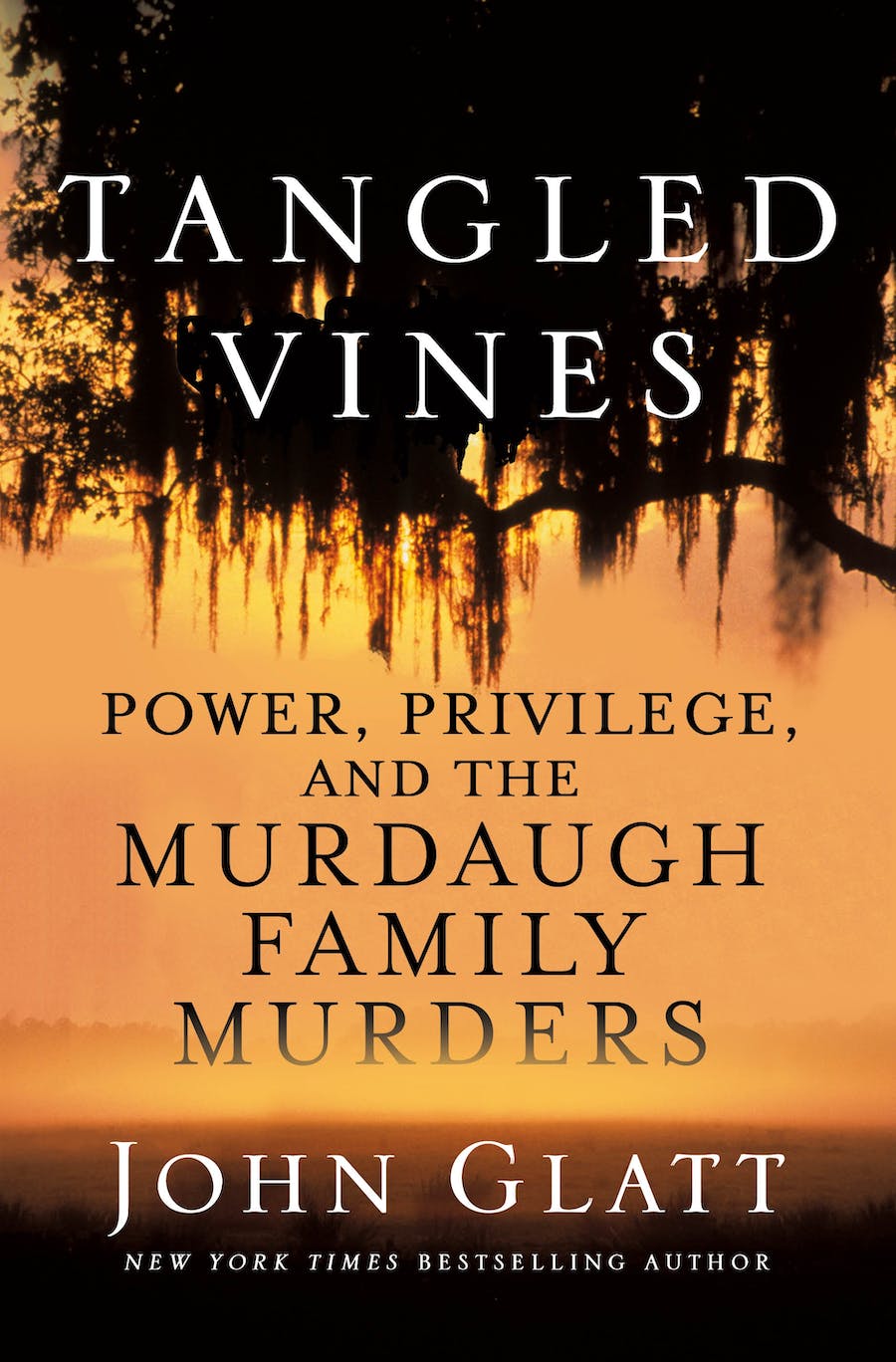
Tangled Vines: Power, Privilege, and the Murdaugh Family Murders

by John Glatt

St. Martin's Press

Hardcover


From the publisher's website:


Among the lush, tree-lined waterways of South Carolina low country, the Murdaugh name means power. A century-old, multimillion-dollar law practice has catapulted the family into incredible wealth and local celebrity—but it was an unimaginable tragedy that would thrust them into the national spotlight. On June 7th, 2021, prominent attorney Alex Murdaugh discovered the bodies of his wife, Maggie, and son, Paul, on the grounds of their thousand-acre hunting lodge. The mystery deepened only months later when Alex himself was discovered shot in the head on a local roadside.

But as authorities scrambled for clues and the community reeled from the loss and media attention, dark secrets about this Southern legal dynasty came to light. The Murdaughs, it turned out, were feared as much as they were loved. And they wouldn’t hesitate to wield their influence to protect one of their own; two years before he was killed, a highly intoxicated Paul Murdaugh was at the helm of a boat when it crashed and killed a teenage girl, and his light treatment by police led to speculation that privilege had come into play. As bombshells of financial fraud were revealed and more suspicious deaths were linked to the Murdaughs, a new portrait of Alex Murdaugh emerged: a desperate man on the brink of ruin who would do anything, even plan his own death, to save his family’s reputation.

First Words:

Saturday

1

Butter and Marietta

Butter Swann sat listening to the eulogy from a pew five rows back from the front. She could see the side of Marietta’s face clearly. She saw her reach a black-­gloved hand up to her neck and rub it hard in a little circular motion that left a bright red blotch on the whiteness of her skin. Marietta still had perfect skin, even after all these years. Butter couldn’t help but notice. Hardly any gray in her hair, either. Still as auburn as it had been when they’d first met in kindergarten. Butter could tell when it was natural and when it wasn’t. She watched as Marietta shifted in her seat on the front row of the church, bending her head sideways, stretching her neck. Butter knew what this meant, she’d seen it happen to Marietta many times before, though not, she realized now, in a long, long time. Age had its small concessions; migraines usually went for younger prey.

Yes, she was sick, Butter thought, as she watched Marietta open her purse and pull out a flowered handkerchief—­an old one from her mother, probably, still smelling of that lilac perfume Caroline had always worn—­and hold it to her mouth. Even from here you could see how pale she’d suddenly gone. Butter felt a needle prick of panic for her once close friend. They’d not had a conversation of any consequence in years, not since Marietta had called Butter—­Butter would never forget the word—­“crass.” Crass! All because Butter had complained about those emergency room doctors seeing that Mexican boy before her grandson, Peter, when he broke his leg skiing on their family vacation in Park City. No insurance, you could tell they weren’t even American, for God’s sake, and Peter having to wait on a gurney in the hallway of that little hospital for two whole hours while they went before him. If she thought about it now, the anger could still come before the guilt. Well, she’d been upset. Couldn’t Marietta have understood that?

- - - - - - - - - -

Those are the first words of:

When the Moon Turns Blue
Hardcover


On the morning after Harry Cline’s funeral, a rare ice storm hits the town of Wesleyan, Georgia. The community wakes up to find its controversial statue of Confederate general Henry Benning destroyed—and not by the weather. Half the town had wanted to remove the statue; the other half had wanted to preserve it. Now that the matter has been taken out of their hands, the town’s long-simmering tensions are laid bare. 


Without Harry beside her, Marietta is left to question many of her preconceived ideas about her friends and family. Her childhood friend, Butter, has come to her aid in ways Marietta never expected or asked for. Her sister-in-law, Glinda, is behaving completely out of character, and her brother, Macon, the top defense attorney in the Southeast, is determined to find those responsible for the damage to the statue and protect the legacy of Old Man Griffin, the owner of the park where it once stood. Marietta longs to salvage these connections, but the world is changing and the divides can no longer be ignored.

With a cast of compassionate, relatable characters, When the Moon Turns Blueis a poignant and timely novel about family, friendship, and what can happen when we discover that we don't particularly like the people we love.


Tuesday, August 8, 2023

On My Radar:

 Highways and Heartaches: How Ricky Skaggs, Marty Stuart, and Children of the New South Saved the Soul of Country Music

by Michael Streissguth

Hachette Books

Hardcover


From the publisher's website:


In a dim clearing off a county road in Kentucky sits a sagging outdoor stage buried in moss and dead leaves.  It used to be the centerpiece of carnival-like Sunday afternoons where local guitarists, fiddlers and mandolin players hammered out old mountain ballads and legends from the dawn of country music performed their classic hits. Most of the musicians who showed up have long since passed, but Nashville stars Ricky Skaggs and Marty Stuart survive.  They were barely teenagers in the early 1970s when they visited this stage in the care of legends Ralph Stanley and Lester Flatt, respectively. Skaggs and Stuart followed their bosses to dozens of stages throughout Appalachia and deeper into the American southland.  They were the children, absorbing the wondrous music and strange dramas around them as they became innovators and living symbols of country music.


Highways and Heartaches takes readers on the rural circuit Skaggs and Stuart traveled, where an acoustic sound first assembled by masters such as Bill Monroe, Earl Scruggs, and Mother Maybelle Carter ruled the day. The young men were heirs to a bluegrass tradition transmitted to them early in life. One part mountain soul and another African American–influenced rhythm, the music they received was alternately celebrated and neglected in the more than fifty years after the two met in 1971, but since then it has never stopped evolving and influencing the wider American culture thanks to Skaggs and Stuart and other actors in this book, such as Jerry Douglas, Tony Rice, Keith Whitley, Emmylou Harris, and Linda Ronstadt. Riveting portraits of Johnny Cash, Ralph Stanley, Lester Flatt and other heartland-born figures emerge, too.
 
Molded by forces in postwar southern culture such as racial conflict, fringe politics, evangelicalism, growing federal government influence, and stubborn patterns of Appalachian living and thinking, Skaggs and Stuart injected the spirit of bluegrass into their hard-wrought experiments in mainstream country music later in life, fueling the profitability and credibility of the fabled genre. Skaggs’s new traditionalism of the 1980s, integrating mountain instruments with elements of contemporary country music, created a new sound for the masses and placed him in the vanguard of Nashville’s recording artists while Stuart embraced seminal influences and attitudes from the riches of American culture to produce a catalog of significant recordings.
 
Skaggs and Stuart’s friendship took years to jell, but their similar pathways reveal a shared dedication to the soul of country music and highlight the curious day-to-day experiences of two lads growing up on the demanding rural route in bluegrass culture. Their journeys—populated by grizzled mentors, fearsome undertows, and cultural upheaval—influenced their creativity and, ultimately, cut life-giving tributaries in the ungainly, eternal story of country music.

First Words:

Chapter One

The Station

  A year of shooting pictures in eastern Ukraine led Elena Gorbacheva to believe she had encountered every sort of person who goes to war. Their many types had swaggered across her photojournalist's viewfinder and into one Russian publication or another. They had emerged from across Russia and beyond and joined informal volunteer-fighter brigades pursuing Kremlin aims in the war that began in Ukraine in 2014. Some of these men were answering a call to history, others adventure or the chance to kill without earthly penalty. Some men preferred the war to the wife. Plenty of men in Russia were willing to wager their lives. As long as the experience would be diverting. 

  Gorbacheva commuted between the war in eastern Ukraine's Donbas region and her life in Moscow. She was in the Russian capital now and hurrying across it to a rendezvous. A contact had summoned her to meet a man who had arrived in Russia to join the war. The man was American, which Gorbachev found thrilling and bizarre, since she knew the problems his nationality would bring.


- - - - - - - - - -

These are the opening words of:

Lost Son: An American Family Trapped Inside The FBI's Secret Wars
Hardcover


A young American lost in Russia. An FBI-cover up. A mystery leading from Washington to the heart of the Kremlin’s war in Ukraine. 

When Billy Reilly vanished, his parents embarked on a desperate search for answers. Was their son’s disappearance connected to his mysterious work for the FBI, or was it a personal quest gone wrong? Only when Wall Street Journal reporter Brett Forrest embarks on his own investigation does a picture emerge: of the FBI’s exploitation of US citizens through a secretive intelligence program, a young man’s lust for adventure within the world’s conflicts, and the costs of a rising clash between Moscow and Washington.

Sept. 11th roused Billy Reilly’s curiosity for religions, war, and the world and its people beyond his small town near Detroit. Online, Billy taught himself Arabic and Russian. His passions led him into jihadi Internet forums, attracting the interest of the FBI.

An amateur drawn into professional intelligence, Billy became a Confidential Human Source, one of thousands of civilians who assist FBI agents with investigative work, often at great hazard and with little recourse. When Russia stirred rebellion in Ukraine, Billy set out to make his mark.

In Russia, Billy’s communications dropped. His parents, frantic, asked the FBI for help but struggled to find answers. Grasping for clues, the Reilly family turned to Brett Forrest. Commencing a quest of his own, Forrest applied years’ worth of research, along with decades of extensive experience in Russia, illuminating the inner workings of the national-security machine that enmeshed Billy and his family, picking up the lost son’s trail.

A masterwork of reporting, composed like a thriller, blending political maneuvering and international espionage, Lost Son illustrates one man’s coming of age amid new global dangers.