Showing posts with label University of Chicago Press. Show all posts

Thursday, October 5, 2017

On My Radar:

What Editors Do: The Art, Craft, and Business of Book Editing
edited by Peter Ginna
University of Chicago Press
Hardcover or Cloth

From the publisher's website:

Editing is an invisible art where the very best work goes undetected. Editors strive to create books that are enlightening, seamless, and pleasurable to read, all while giving credit to the author. This makes it all the more difficult to truly understand the range of roles they inhabit while shepherding a project from concept to publication.

In What Editors Do, Peter Ginna gathers essays from twenty-seven leading figures in book publishing about their work. Representing both large houses and small, and encompassing trade, textbook, academic, and children’s publishing, the contributors make the case for why editing remains a vital function to writers—and readers—everywhere.

Ironically for an industry built on words, there has been a scarcity of written guidance on how to actually approach the work of editing. This book will serve as a compendium of professional advice and will be a resource both for those entering the profession (or already in it) and for those outside publishing who seek an understanding of it. It sheds light on how editors acquire books, what constitutes a strong author-editor relationship, and the editor’s vital role at each stage of the publishing process—a role that extends far beyond marking up the author’s text.

This collection treats editing as both art and craft, and also as a career. It explores how editors balance passion against the economic realities of publishing. What Editors Do shows why, in the face of a rapidly changing publishing landscape, editors are more important than ever.



Friday, May 1, 2015

On My Radar:

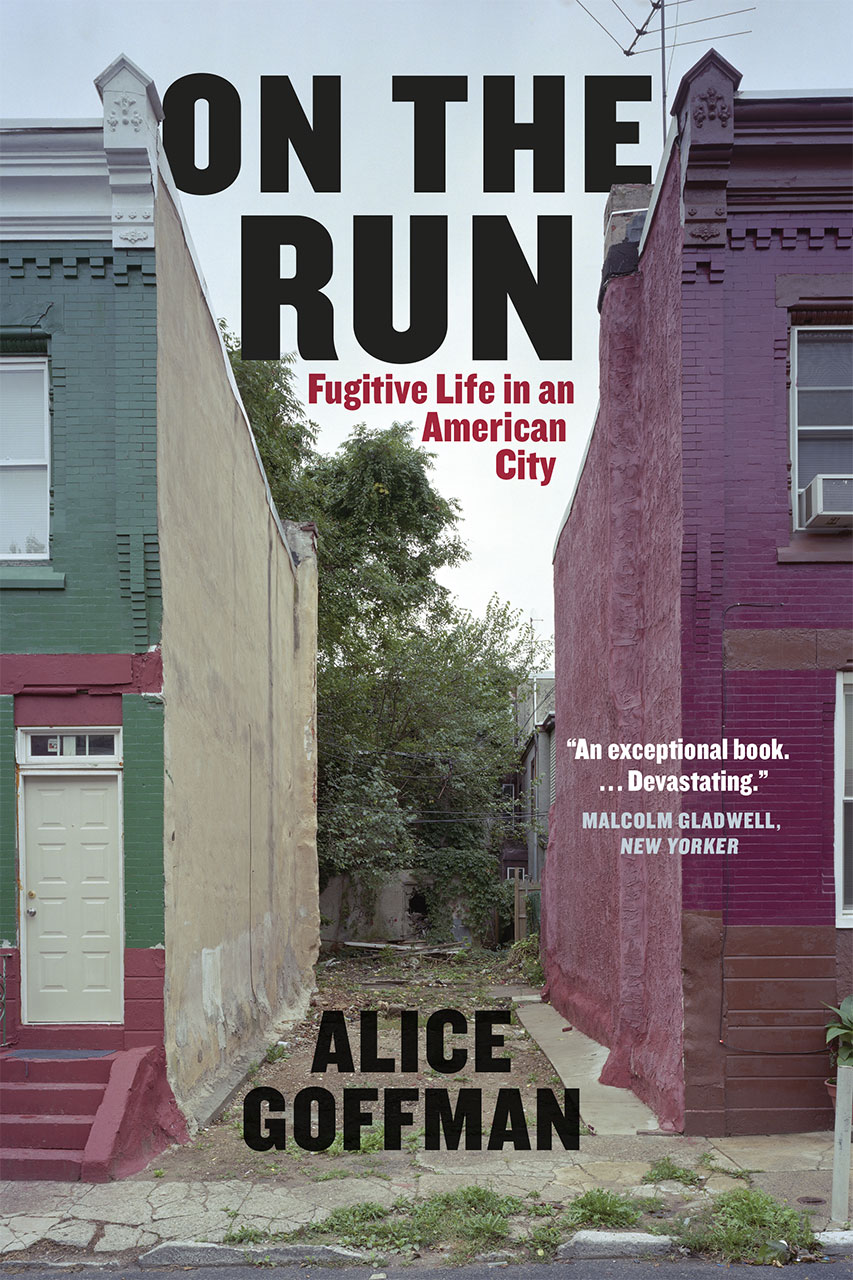
On the Run: Fugitive Life in an American City
by Alice Goffman
University of Chicago Press
Hardcover

From the publisher's website:

Forty years in, the War on Drugs has done almost nothing to prevent drugs from being sold or used, but it has nonetheless created a little-known surveillance state in America’s most disadvantaged neighborhoods. Arrest quotas and high-tech surveillance techniques criminalize entire blocks, and transform the very associations that should stabilize young lives—family, relationships, jobs—into liabilities, as the police use such relationships to track down suspects, demand information, and threaten consequences.

Alice Goffman spent six years living in one such neighborhood in Philadelphia, and her close observations and often harrowing stories reveal the pernicious effects of this pervasive policing. Goffman introduces us to an unforgettable cast of young African American men who are caught up in this web of warrants and surveillance—some of them small-time drug dealers, others just ordinary guys dealing with limited choices. All find the web of presumed criminality, built as it is on the very associations and friendships that make up a life, nearly impossible to escape. We watch as the pleasures of summer-evening stoop-sitting are shattered by the arrival of a carful of cops looking to serve a warrant; we watch—and can’t help but be shocked—as teenagers teach their younger siblings and cousins how to run from the police (and, crucially, to keep away from friends and family so they can stay hidden); and we see, over and over, the relentless toll that the presumption of criminality takes on families—and futures.


While not denying the problems of the drug trade, and the violence that often accompanies it, through her gripping accounts of daily life in the forgotten neighborhoods of America's cities, Goffman makes it impossible for us to ignore the very real human costs of our failed response—the blighting of entire neighborhoods, and the needless sacrifice of whole generations.

Saturday, March 28, 2015

On My Radar:

The Hidden Game of Baseball: A Revolutionary Approach to Baseball and its Statistics
by John Thorn & Pete Palmer
Univeristy of Chicago Press
Hardcover

From the publisher's website:

Long before Moneyball became a sensation or Nate Silver turned the knowledge he’d honed on baseball into electoral gold, John Thorn and Pete Palmer were using statistics to shake the foundations of the game. First published in 1984, The Hidden Game of Baseball ushered in the sabermetric revolution by demonstrating that we were thinking about baseball stats—and thus the game itself—all wrong. Instead of praising sluggers for gaudy RBI totals or pitchers for wins, Thorn and Palmer argued in favor of more subtle measurements that correlated much more closely to the ultimate goal: winning baseball games.

The new gospel promulgated by Thorn and Palmer opened the door for a flood of new questions, such as how a ballpark’s layout helps or hinders offense or whether a strikeout really is worse than another kind of out. Taking questions like these seriously—and backing up the answers with data—launched a new era, showing fans, journalists, scouts, executives, and even players themselves a new, better way to look at the game.


This brand-new edition retains the body of the original, with its rich, accessible analysis rooted in a deep love of baseball, while adding a new introduction by the authors tracing the book’s influence over the years. A foreword by ESPN’s lead baseball analyst, Keith Law, details The Hidden Game’s central role in the transformation of baseball coverage and team management and shows how teams continue to reap the benefits of Thorn and Palmer’s insights today. Thirty years after its original publication, The Hidden Game is still bringing the high heat—a true classic of baseball literature.

Thursday, October 11, 2012

On My Radar:

The Atheist's Bible: The Most Dangerous Book That Never Existed
by Georges Minois
University of Chicago Press
Hardcover

From the publisher website:

Like a lot of good stories, this one begins with a rumor: in 1239, Pope Gregory IX accused Frederick II, the Holy Roman Emperor, of heresy. Without disclosing evidence of any kind, Gregory announced that Frederick had written a supremely blasphemous book—De tribus impostoribus, or the Treatise of the Three Impostors—in which Frederick denounced Moses, Jesus, and Muhammad as impostors. Of course, Frederick denied the charge, and over the following centuries the story played out across Europe, with libertines, freethinkers, and other “strong minds” seeking a copy of the scandalous text. The fascination persisted until finally, in the eighteenth century, someone brought the purported work into actual existence—in not one but two versions, Latin and French.
Although historians have debated the origins and influences of this nonexistent book, there has not been a comprehensive biography of the Treatise of the Three Impostors. In The Atheist’s Bible, the eminent historian Georges Minois tracks the course of the book from its origins in 1239 to its most salient episodes in the seventeenth and eighteenth centuries, introducing readers to the colorful individuals obsessed with possessing the legendary work—and the equally obsessive passion of those who wanted to punish people who sought it. Minois’s compelling account sheds much-needed light on the power of atheism, the threat of blasphemy, and the persistence of free thought during a time when the outspoken risked being burned at the stake.