Showing posts with label Penguin Press. Show all posts

Saturday, July 30, 2022

Coming Soon:

Acceptance:  A Memoir

by Emi Nietfeld

Penguin Press
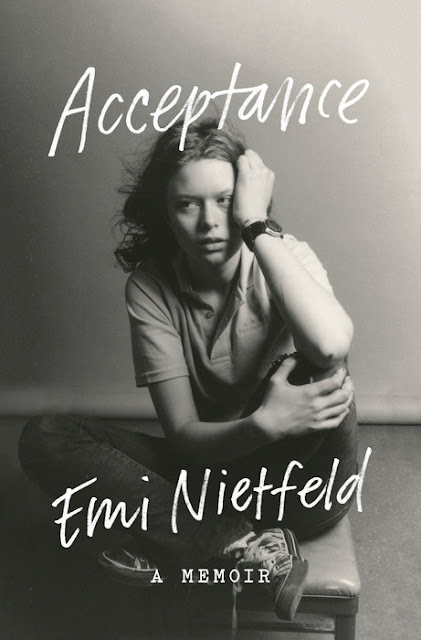
Hardcover


From the publisher's website:


As a homeless teenager writing college essays in her rusty Toyota Corolla, Emi Nietfeld was convinced that the Ivy League was the only escape from her dysfunctional childhood. But upward mobility required crafting the perfect resilience narrative. She had to prove that she was an “overcomer,” made stronger by all that she had endured.

 
The truth was more complicated. Emi’s mom was a charming hoarder who had her put on antipsychotics but believed in her daughter’s brilliance—unlike the Minnesotan foster family who banned her “pornographic” art history flash cards (of Michelangelo’s David). Emi’s other parent vanished shortly after coming out as trans, a situation few understood in the mid-2000s. Her own past was filled with secrets: mental health struggles, Adderall addiction, and the unbecoming desperation of a teenager fending for herself. And though Emi would go on to graduate from Harvard and become a software engineer at Google, she found that success didn’t necessarily mean safety.
 
Both a chronicle of the American Dream and an indictment of it, this searing debut exposes the price of trading a troubled past for the promise of a bright future. Told with a ribbon of dark humor, Acceptance challenges our ideas of what it means to overcome—and find contentment on your own terms.

Tuesday, July 12, 2022

Now Available:

Thank You for Your Servitude:  Donald Trump's Washington and the Price of Submission

by Mark Leibovich

Penguin Press

Hardcover


From the publisher's website:


In the early months of Trump’s candidacy, the Republican Party’s most important figures, people such as Marco Rubio, Ted Cruz, and Lindsey Graham, were united—and loud—in their scorn and contempt. Even more, in their outrage: Trump was a menace and an affront to our democracy. Then, awkwardly, Trump won.


Thank You for Your Servitude is Mark Leibovich’s unflinching account of the moral rout of a major American political party, tracking the transformation of Rubio, Cruz, Graham, and their ilk into the administration’s chief enablers, and the swamp’s lesser lights into frantic chasers of the grift. What would these politicos do to preserve their place in the sun, or at least the orbit of the spray tan? What would they do to preserve their “relevance”? Almost anything, it turns out. Trump’s savage bullying of everyone in his circle, along with his singular command of his political base, created a dangerous culture of submission in the Republican Party. Meanwhile, many of the most alpha of the lapdogs happily conceded to Mark Leibovich that they were “in on the joke.” As Lindsey Graham told the author, his supporters in South Carolina generally don’t read The New York Times, and they won’t read this book, either. All that cynicism, shading into nihilism, led to a country truly unhinged from reality, and to the events of January 6, 2021. It’s a vista that makes the Washington of This Townseem like a comedy of manners in comparison. 
 
Thank You for Your Servitude isn’t another view from the Oval Office: it’s the view from the Trump Hotel. We can check out any time we want, but only time will tell if we can ever leave.


Monday, February 7, 2022

On My Radar:

 The Nineties: A Book

by Chuck Klosterman

Penguin Press

Hardcover


From the publisher's website:


It was long ago, but not as long as it seems: The Berlin Wall fell and the Twin Towers collapsed. In between, one presidential election was allegedly decided by Ross Perot while another was plausibly decided by Ralph Nader. In the beginning, almost every name and address was listed in a phone book, and everyone answered their landlines because you didn’t know who it was. By the end, exposing someone’s address was an act of emotional violence, and nobody picked up their new cell phone if they didn’t know who it was. The 90s brought about a revolution in the human condition we’re still groping to understand. Happily, Chuck Klosterman is more than up to the job.

Beyond epiphenomena like “Cop Killer” and Titanic and Zima, there  were wholesale shifts in how society was perceived: the rise of the internet, pre-9/11 politics, and the paradoxical belief that nothing was more humiliating than trying too hard. Pop culture accelerated without the aid of a machine that remembered everything, generating an odd comfort in never being certain about anything. On a 90’s Thursday night, more people watched any random episode of Seinfeld than the finale of Game of Thrones. But nobody thought that was important; if you missed it, you simply missed it. It was the last era that held to the idea of a true, hegemonic mainstream before it all began to fracture, whether you found a home in it or defined yourself against it.
 
In The Nineties, Chuck Klosterman makes a home in all of it: the film, the music, the sports, the TV, the politics, the changes regarding race and class and sexuality, the yin/yang of Oprah and Alan Greenspan. In perhaps no other book ever written would a sentence like, “The video for ‘Smells Like Teen Spirit’ was not more consequential than the reunification of Germany” make complete sense. Chuck Klosterman has written a multi-dimensional masterpiece, a work of synthesis so smart and delightful that future historians might well refer to this entire period as Klostermanian

Tuesday, November 2, 2021

Coming Soon:

Led Zeppelin: The Biography
Available November 9, 2021
by Bob Spitz
Penguin Press
Hardcover


From the publisher's website:


Rock star. 

Whatever that term means to you, chances are it owes a debt to Led Zeppelin. No one before or since has lived the dream quite like Jimmy Page, Robert Plant, John Paul Jones, and John Bonham. In Led Zeppelin, Bob Spitz takes their full measure, separating the myth from the reality with his trademark connoisseurship and storytelling flair.

From the opening notes of their first album, the band announced itself as something different, a collision of grand artistic ambition and brute primal force, of English folk music and African American blues. That record sold over 10 million copies, and it was just the beginning; Led Zeppelin’s albums have sold over 300 million certified copies worldwide, and the dust has never settled.

The band is notoriously guarded, and previous books provided more heat than light. But Spitz’s authority is undeniable and irresistible. His feel for the atmosphere, the context–the music, the business, the recording studios, the touring life, the whole ecosystem of popular music–is unparalleled. His account of the melding of Page and Jones, the virtuosic London sophisticates, with Plant and Bonham, the wild men from the Midlands, in a scene dominated by the Beatles and the Stones but changing fast, is in itself a revelation. Spitz takes the music seriously and brings the band’s artistic journey to full and vivid life.

The music, however, is only part of the legend: Led Zeppelin is also the story of how the sixties became the seventies, of how playing clubs became playing stadiums, of how innocence became decadence. Led Zeppelin wasn’t the first rock band to let loose on the road, but as with everything else, they took it to an entirely new level. Not all the legends are true, but in Spitz’s careful accounting, what is true is astonishing and sometimes disturbing.

Led Zeppelin gave no quarter, and neither has Bob Spitz. Led Zeppelin is the full and honest reckoning the band has long awaited, and richly deserves.


Monday, November 1, 2021

Coming Soon:

Will
Available November 8, 2021
by Will Smith, with Mark Manson
Penguin Press
Hardcover


From the publisher's website:


Will Smith’s transformation from a West Philadelphia kid to one of the biggest rap stars of his era, and then one of the biggest movie stars in Hollywood history, is an epic tale—but it’s only half the story.

Will Smith thought, with good reason, that he had won at life: not only was his own success unparalleled, his whole family was at the pinnacle of the entertainment world. Only they didn’t see it that way: they felt more like star performers in his circus, a seven-days-a-week job they hadn’t signed up for. It turned out Will Smith’s education wasn’t nearly over.

This memoir is the product of a profound journey of self-knowledge, a reckoning with all that your will can get you and all that it can leave behind. Written with the help of Mark Manson, author of the multi-million-copy bestseller The Subtle Art of Not Giving a F*ck, Will is the story of how one person mastered his own emotions, written in a way that can help everyone else do the same. Few of us will know the pressure of performing on the world’s biggest stages for the highest of stakes, but we can all understand that the fuel that works for one stage of our journey might have to be changed if we want to make it all the way home. The combination of genuine wisdom of universal value and a life story that is preposterously entertaining, even astonishing, puts Will the book, like its author, in a category by itself.

Wednesday, October 6, 2021

Coming Soon:

All of the Marvels: A Journey to the Ends of the Biggest Story Ever Told
Available October 12th, 2021
by Douglas Wolk
Penguin Press
Hardcover


From the publisher's website:


The superhero comic books that Marvel Comics has published since 1961 are, as Douglas Wolk notes, the longest continuous, self-contained work of fiction ever created: over half a million pages to date, and still growing. The Marvel story is a gigantic mountain smack in the middle of contemporary culture. Thousands of writers and artists have contributed to it. Everyone recognizes its protagonists: Spider-Man, the Avengers, the X-Men. Eighteen of the hundred highest-grossing movies of all time are based on parts of it. Yet not even the people telling the story have read the whole thing—nobody’s supposed to. So, of course, that’s what Wolk did: he read all 27,000+ comics that make up the Marvel Universe thus far, from Alpha Flight to Omega the Unknown.

And then he made sense of it—seeing into the ever-expanding story, in its parts and as a whole, and seeing through it, as a prism through which to view the landscape of American culture. In Wolk’s hands, the mammoth Marvel narrative becomes a fun-house-mirror history of the past sixty years, from the atomic night terrors of the Cold War to the technocracy and political division of the present day—a boisterous, tragicomic, magnificently filigreed epic about power and ethics, set in a world transformed by wonders.

As a work of cultural exegesis, this is sneakily significant, even a landmark; it’s also ludicrously fun. Wolk sees fascinating patterns—the rise and fall of particular cultural aspirations, and of the storytelling modes that conveyed them. He observes the Marvel story’s progressive visions and its painful stereotypes, its patches of woeful hackwork and stretches of luminous creativity, and the way it all feeds into a potent cosmology that echoes our deepest hopes and fears. This is a huge treat for Marvel fans, but it’s also a revelation for readers who don’t know Doctor Strange from Doctor Doom. Here, truly, are all of the marvels.

Monday, July 19, 2021

On My Radar:

I Alone Can Fix It: Donald J. Trump's Catastrophic Final Year
by Carol Leonnig and Philip Rucker
Penguin Press
Hardcover


From the publisher's website:


The true story of what took place in Donald Trump’s White House during a disastrous 2020 has never before been told in full. What was really going on around the president, as the government failed to contain the coronavirus and over half a million Americans perished? Who was influencing Trump after he refused to concede an election he had clearly lost and spread lies about election fraud? To answer these questions, Phil Rucker and Carol Leonnig reveal a dysfunctional and bumbling presidency’s inner workings in unprecedented, stunning detail.

Focused on Trump and the key players around him—the doctors, generals, senior advisers, and Trump family members— Rucker and Leonnig provide a forensic account of the most devastating year in a presidency like no other. Their sources were in the room as time and time again Trump put his personal gain ahead of the good of the country. These witnesses to history tell the story of him longing to deploy the military to the streets of American cities to crush the protest movement in the wake of the killing of George Floyd, all to bolster his image of strength ahead of the election. These sources saw firsthand his refusal to take the threat of the coronavirus seriously—even to the point of allowing himself and those around him to be infected. This is a story of a nation sabotaged—economically, medically, and politically—by its own leader, culminating with a groundbreaking, minute-by-minute account of exactly what went on in the Capitol building on January 6, as Trump’s supporters so easily breached the most sacred halls of American democracy, and how the president reacted. With unparalleled access, Rucker and Leonnig explain and expose exactly who enabled—and who foiled—Trump as he sought desperately to cling to power.

A classic and heart-racing work of investigative reporting, this book is destined to be read and studied by citizens and historians alike for decades to come.


Tuesday, July 21, 2020

On My Radar:

Baseless: My Search for Secrets in the Ruins of the Freedom of Information Act
by Nicholson Baker
Penguin Press
Hardcover

From the publisher's website:

Eight years ago, while investigating the possibility that the United States had used biological weapons in the Korean War, Nicholson Baker requested a series of Air Force documents from the early 1950s under the provisions of the Freedom of Information Act. Years went by, and he got no response. Rather than wait forever, Baker set out to keep a personal journal of what it feels like to try to write about major historical events in a world of pervasive redactions, witheld records, and glacially slow governmental responses. The result is one of the most original and daring works of nonfiction in recent memory, a singular and mesmerizing narrative that tunnels into the history of some of the darkest and most shameful plans and projects of the CIA, the Air Force, and the presidencies of Harry Truman and Dwight Eisenhower. 

In his lucid and unassuming style, Baker assembles what he learns, piece by piece, about Project Baseless, a crash Pentagon program begun in the early fifties that aimed to achieve “an Air Force-wide combat capability in biological and chemical warfare at the earliest possible date.” Along the way, he unearths stories of balloons carrying crop disease, leaflet bombs filled with feathers, suicidal scientists, leaky centrifuges, paranoid political-warfare tacticians, insane experiments on animals and humans, weaponized ticks, ferocious propaganda battles with China, and cover and deception plans meant to trick the Kremlin into ramping up its germ-warfare program. At the same time, Baker tells the stories of the heroic journalists and lawyers who have devoted their energies to wresting documentary evidence from goverment repositories, and he shares anecdotes from his daily life in Maine feeding his dogs and watching the morning light gather on the horizon. The result is an astonishing and utterly disarming story about waiting, bureaucracy, the horrors of war, and, above all, the cruel secrets that the United States government seems determined to keep forever from its citizens.


Monday, January 13, 2020

On My Radar:

An Imperfect Union: How Jessie and John Fremont Mapped the West, Invented Celebrity, and Helped Cause the Civil War
by Steve Inskeep
Penguin Press
Hardcover

From the publisher's website:

John C. Frémont, one of the United States’s leading explorers of the nineteenth century, was relatively unknown in 1842, when he commanded the first of his expeditions to the uncharted West. But in only a few years, he was one of the most acclaimed people of the age – known as a wilderness explorer, bestselling writer, gallant army officer, and latter-day conquistador, who in 1846 began the United States’s takeover of California from Mexico. He was not even 40 years old when Americans began naming mountains and towns after him. He had perfect timing, exploring the West just as it captured the nation’s attention. But the most important factor in his fame may have been the person who made it all possible: his wife, Jessie Benton Frémont. 
 
Jessie, the daughter of a United States senator who was deeply involved in the West, provided her husband with entrée to the highest levels of government and media, and his career reached new heights only a few months after their elopement. During a time when women were allowed to make few choices for themselves, Jessie – who herself aspired to roles in exploration and politics – threw her skill and passion into promoting her husband. She worked to carefully edit and publicize his accounts of his travels, attracted talented young men to his circle, and lashed out at his enemies. She became her husband’s political adviser, as well as a power player in her own right. In 1856, the famous couple strategized as John became the first-ever presidential nominee of the newly established Republican Party. 

With rare detail and in consummate style, Steve Inskeep tells the story of a couple whose joint ambitions and talents intertwined with those of the nascent United States itself. Taking advantage of expanding news media, aided by an increasingly literate public, the two linked their names to the three great national movements of the time—westward settlement, women’s rights, and opposition to slavery. Together, John and Jessie Frémont took parts in events that defined the country and gave rise to a new, more global America. Theirs is a surprisingly modern tale of ambition and fame; they lived in a time of social and technological disruption and divisive politics that foreshadowed our own. In Imperfect Union, as Inskeep navigates these deeply transformative years through Jessie and John’s own union, he reveals how the Frémonts’ adventures amount to nothing less than a tour of the early American soul.


Sunday, June 2, 2019

On My Radar:

Play Hungry: The Making of a Baseball Player
by Pete Rose
Penguin Press
Hardcover

From the publisher's website:

Pete Rose was a legend on the field. As baseball’s Hit King, he shattered records that were thought to be unbreakable. And during the 1970s, he was the leader of the Big Red Machine, the Cincinnati Reds team that dominated the game. But he’s also the greatest player who may never enter the Hall of Fame because of his lifetime ban from the sport. Perhaps no other ballplayer’s story is so representative of the triumphs and tragedies of our national pastime. 

In Play Hungry, Rose tells us the story of how, through hard work and sheer will, he became one of the unlikeliest stars of the game. Guided by the dad he idolized, a local sports hero, Pete learned to play hard and always focus on winning. But even with his dad’s guidance, Pete was cut from his team as a teenager—he wasn’t a natural. Rose was determined, though, and never would be satisfied with anything less than success. His relentless hustle and headfirst style would help him overcome his limitations, leading him to one of the most exciting and brash careers in the history of the sport.

Play Hungry is Pete Rose’s love letter to the game, and an unvarnished story of life on the diamond. One of the icons of a golden age in baseball, he describes just what it was like to hit (or try to hit) a Bob Gibson fastball or a Gaylord Perry spitball, what happened in that infamous collision at home plate during the 1970 All-Star Game, and what it felt like to topple Ty Cobb’s hit record. And he speaks to how he let down his fans, his teammates, and the memory of his dad when he gambled on baseball, breaking the rules of a sport that he loved more than anything else. Told with candor and wry humor—including tales he’s never told before—Rose’s memoir is his final word on the glories and controversies of his life, and, ultimately, a master class in how to succeed when the odds are stacked against you.

Friday, May 17, 2019

On My Radar:

Spying on the South: An Odyssey Across the American Divide
by Tony Horwitz
Penguin Press
Hardcover

From the publisher's website:

In the 1850s, the young Frederick Law Olmsted was adrift, a restless farmer and dreamer in search of a mission. He found it during an extraordinary journey, as an undercover correspondent in the South for the up-and-coming New York Times.

For the Connecticut Yankee, pen name “Yeoman,” the South was alien, often hostile territory. Yet Olmsted traveled for 14 months, by horseback, steamboat, and stagecoach, seeking dialogue and common ground. His vivid dispatches about the lives and beliefs of Southerners were revelatory for readers of his day, and Yeoman’s remarkable trek also reshaped the American landscape, as Olmsted sought to reform his own society by creating democratic spaces for the uplift of all. The result: Central Park and Olmsted’s career as America’s first and foremost landscape architect.

Tony Horwitz rediscovers Yeoman Olmsted amidst the discord and polarization of our own time. Is America still one country? In search of answers, and his own adventures, Horwitz follows Olmsted’s tracks and often his mode of transport (including muleback): through Appalachia, down the Mississippi River, into bayou Louisiana, and across Texas to the contested Mexican borderland. Venturing far off beaten paths, Horwitz uncovers bracing vestiges and strange new mutations of the Cotton Kingdom. Horwitz’s intrepid and often hilarious journey through an outsized American landscape is a masterpiece in the tradition of Great PlainsBad Land, and the author’s own classic, Confederates in the Attic.


Thursday, November 22, 2018

In My TBR Stack:

The War Before the War: Fugitive Slaves and the Struggle for America's Soul from the Revolutionary to the Civil War
by Andrew Delbanco
Penguin Press
Hardcover

From the publisher's website:

For decades after its founding, America was really two nations–one slave, one free. There were many reasons why this composite nation ultimately broke apart, but the fact that enslaved black people repeatedly risked their lives to flee their masters in the South in search of freedom in the North proved that the “united” states was actually a lie. Fugitive slaves exposed the contradiction between the myth that slavery was a benign institution and the reality that a nation based on the principle of human equality was in fact a prison-house in which millions of Americans had no rights at all. By awakening northerners to the true nature of slavery, and by enraging southerners who demanded the return of their human “property,” fugitive slaves forced the nation to confront the truth about itself.

By 1850, with America on the verge of collapse, Congress reached what it hoped was a solution– the notorious Compromise of 1850, which required that fugitive slaves be returned to their masters. Like so many political compromises before and since, it was a deal by which white Americans tried to advance their interests at the expense of black Americans. Yet the Fugitive Slave Act, intended to preserve the Union, in fact set the nation on the path to civil war. It divided not only the American nation, but also the hearts and minds of Americans who struggled with the timeless problem of when to submit to an unjust law and when to resist.  

The fugitive slave story illuminates what brought us to war with ourselves and the terrible legacies of slavery that are with us still.


Thursday, October 11, 2018

In My TBR Stack:

The Invisible Emperor: Napoleon on Elba from Exile to Escape
by Mark Braude
Penguin Press
Hardcover

From the publisher's website:

In the spring of 1814, Napoleon Bonaparte was defeated. Having overseen an empire spanning half the European continent and governed the lives of some eighty million people, he suddenly found himself exiled to Elba, less than a hundred square miles of territory. This would have been the end of him, if Europe’s rulers had had their way. But soon enough Napoleon imposed his preternatural charisma and historic ambition on both his captors and the very island itself, plotting his return to France and to power. After ten months of exile, he escaped Elba with just of over a thousand supporters in tow, landed near Antibes, marched to Paris, and retook the Tuileries Palace–all without firing a shot. Not long after, tens of thousands of people would die fighting for and against him at Waterloo.

Braude dramatizes this strange exile and improbable escape in granular detail and with novelistic relish, offering sharp new insights into a largely overlooked moment. He details a terrific cast of secondary characters, including Napoleon’s tragically-noble official British minder on Elba, Neil Campbell, forever disgraced for having let “Boney” slip away; and his young second wife, Marie Louise who was twenty-two to Napoleon’s forty-four, at the time of his abdication. What emerges is a surprising new perspective on one of history’s most consequential figures, which both subverts and celebrates his legendary persona. The Invisible Emperor is both a riveting story and an original examination of how preposterous, quixotic, and grandiose ideas can suddenly leap from the imagination and into reality.


Tuesday, September 25, 2018

In My TBR Stack:

The Poison Squad: One Chemist's Single-Minded Crusade for Food Safety at the  Turn of the Twentieth Century
by Deborah Blum
Penguin Press
Hardcover

From the publisher's website:

By the end of nineteenth century, food was dangerous. Lethal, even. “Milk” might contain formaldehyde, most often used to embalm corpses. Decaying meat was preserved with both salicylic acid, a pharmaceutical chemical, and borax, a compound first identified as a cleaning product. This was not by accident; food manufacturers had rushed to embrace the rise of industrial chemistry, and were knowingly selling harmful products. Unchecked by government regulation, basic safety, or even labelling requirements, they put profit before the health of their customers. By some estimates, in New York City alone, thousands of children were killed by “embalmed milk” every year. Citizens–activists, journalists, scientists, and women’s groups–began agitating for change. But even as protective measures were enacted in Europe, American corporations blocked even modest regulations. Then, in 1883, Dr. Harvey Washington Wiley, a chemistry professor from Purdue University, was named chief chemist of the agriculture department, and the agency began methodically investigating food and drink fraud, even conducting shocking human tests on groups of young men who came to be known as, “The Poison Squad.” 

Over the next thirty years, a titanic struggle took place, with the courageous and fascinating Dr. Wiley campaigning indefatigably for food safety and consumer protection. Together with a gallant cast, including the muckraking reporter Upton Sinclair, whose fiction revealed the horrific truth about the Chicago stockyards; Fannie Farmer, then the most famous cookbook author in the country; and Henry J. Heinz, one of the few food producers who actively advocated for pure food, Dr. Wiley changed history. When the landmark 1906 Food and Drug Act was finally passed, it was known across the land, as “Dr. Wiley’s Law.” 

Blum brings to life this timeless and hugely satisfying “David and Goliath” tale with righteous verve and style, driving home the moral imperative of confronting corporate greed and government corruption with a bracing clarity, which speaks resoundingly to the enormous social and political challenges we face today.


Wednesday, September 12, 2018

In My TBR Stack:

They Fought Alone: The True Story of the Starr Brothers, British Secret Agents in Nazi-Occupied France
by Charles Glass
Penguin Press
Hardcover

From the publisher's website:

As far as the public knew, Britain’s Special Operations Executive (SOE) did not exist. After the defeat of the French Army and Britain’s retreat from the Continent in June 1940, Prime Minister Winston Churchill created the top-secret espionage operation to “set Europe ablaze.” The agents infiltrated Nazi-occupied territory, parachuting behind enemy lines and hiding in plain sight, quietly but forcefully recruiting, training, and arming local French résistants to attack the German war machine. SOE would not only change the course of the war, but the nature of combat itself. Of the many brave men and women conscripted, two Anglo-American recruits, the Starr brothers, stood out to become legendary figures to the guerillas, assassins, and saboteurs they led.

While both brothers were sent across the channel to organize against the Germans, their fates in war could hardly have been more different. Captain George Starr commanded networks of résistants in southwest France, cutting German communications, destroying weapons factories, and delaying the arrival of Nazi troops to Normandy by seventeen days after D-Day. Younger brother Lieutenant John Starr laid groundwork for resistance in the Burgundy countryside until he was betrayed, captured, tortured, and imprisoned by the Nazis in France and sent to a series of concentration camps in Germany and Austria. Feats of boldness and bravado were many, but appalling scandals, including George’s supposed torture and execution of Nazis prisoners, and John’s alleged collaboration with his German captors, overshadowed them all. At the war’s end, Britain, France, and the United States awarded both brothers medals for heroism, and George would become one of only three among thousands of SOE operatives to achieve the rank of colonel. Yet, their battle honors did little to allay postwar allegations against them, and when they returned to England, their government accused both brothers of heinous war crimes.

Here, for the first time, is the story of one of the great clandestine organizations of World War II, and of two heroic brothers whose ordeals during and after the war challenged the accepted myths of Britain’s wartime resistance in occupied France. Written with complete and unrivaled access to only recently declassified documents from Britain’s SOE files, French archives, family letters, diaries, and court records, along with interviews from surviving wartime Resistance fighters, They Fought Alone is a real-life thriller. Renowned journalist and war correspondent Charles Glass exposes a dramatic tale of spies, sabotage, and the daring men and women who risked everything to change the course of World War II.


Tuesday, July 18, 2017

On My Radar:

Devil's Bargain: Steve Bannon, Donald Trump, and the Storming of the Presidency
by Joshua Green
Penguin Press
Hardcover

From the publisher's website:

Based on dozens of interviews conducted over six years, Green spins the master narrative of the 2016 campaign from its origins in the far fringes of right-wing politics and reality television to its culmination inside Trump’s penthouse on election night.

The shocking elevation of Bannon to head Trump’s flagging presidential campaign on August 17, 2016, hit political Washington like a thunderclap and seemed to signal the meltdown of the Republican Party. Bannon was a bomb-throwing pugilist who’d never run a campaign and was despised by Democrats and Republicans alike.  

Yet Bannon’s hard-edged ethno-nationalism and his elaborate, years-long plot to destroy Hillary Clinton paved the way for Trump’s unlikely victory. Trump became the avatar of a dark but powerful worldview that dominated the airwaves and spoke to voters whom others couldn’t see. Trump’s campaign was the final phase of a populist insurgency that had been building up in America for years, and Bannon, its inscrutable mastermind, believed it was the culmination of a hard-right global uprising that would change the world.

Any study of Trump’s rise to the presidency is unavoidably a study of Bannon. Devil’s Bargain is a tour-de-force telling of the remarkable confluence of circumstances that decided the election, many of them orchestrated by Bannon and his allies, who really did plot a vast, right-wing conspiracy to stop Clinton. To understand Trump’s extraordinary rise and Clinton’s fall, you have to weave Trump's story together with Bannon's, or else it doesn't make sense.


Thursday, August 4, 2016

On My Radar:

The Man in the Monster: An Intimate Portrait of a Serial Killer
by Martha Elliott
Penguin Press
Trade Paperback

From the publisher's website:


Michael Ross was a serial killer who raped and murdered eight young women between 1981 and 1984. In 2005, the state of Connecticut put him to death by lethal injection. His crimes were horrific, and he paid the ultimate price for them.

When journalist Martha Elliott first heard of Ross, she learned what the world knew of him—that he had been a master at hiding in plain sight. Elliott, a staunch critic of the death penalty, was drawn to the case when the Connecticut Supreme Court overturned Ross’s six death sentences. Rather than fight for his life, Ross requested that he be executed because he didn’t want the families of his victims to suffer through a new trial. Elliott was intrigued and sought an interview. The two began a weekly conversation—and developed an odd form of friendship—that lasted over a decade, until Ross’s last moments of life.

Over the course of his twenty years in prison, Ross had come to embrace faith for the first time in his life. He had also undergone extensive medical treatment. The Michael Ross whom Elliott knew seemed to be a different man from the monster who was capable of such heinous crimes. This Michael Ross made it his mission to share his story with Elliott in the hopes that it would save lives. He was her partner in unlocking the mystery of his own evil.

In
The Man in the Monster, Martha Elliott gives us a groundbreaking look into the life and motivation of a serial killer. Drawing on a decade of conversations and letters between Ross and the author, readers are given an in-depth view of a killer’s innermost thoughts and secrets, revealing the human face of a monster—without ignoring the horrors of his crimes. Elliott takes us deep into a world of court hearings, tomblike prisons, lawyers hell-bent to kill or to save—and families ravaged by love and hate. This is the personal story of a journalist who came to know herself in ways she could never have imagined when she opened the notebook for that first interview.


Wednesday, December 31, 2014

In My TBR Stack:

Stalin
by Stephen Kotkin
Penguin Press
Hardcover

From the publisher's website:

It has the quality of myth: a poor cobbler’s son, a seminarian from an oppressed outer province of the Russian empire, reinvents himself as a top leader in a band of revolutionary zealots. When the band seizes control of the country in the aftermath of total world war, the former seminarian ruthlessly dominates the new regime until he stands as absolute ruler of a vast and terrible state apparatus, with dominion over Eurasia. While still building his power base within the Bolshevik dictatorship, he embarks upon the greatest gamble of his political life and the largest program of social reengineering ever attempted: the collectivization of all agriculture and industry across one sixth of the earth. Millions will die, and many more millions will suffer, but the man will push through to the end against all resistance and doubts.

Where did such power come from?  In Stalin, Stephen Kotkin offers a biography that, at long last, is equal to this shrewd, sociopathic, charismatic dictator in all his dimensions. The character of Stalin emerges as both astute and blinkered, cynical and true believing, people oriented and vicious, canny enough to see through people but prone to nonsensical beliefs. We see a man inclined to despotism who could be utterly charming, a pragmatic ideologue, a leader who obsessed over slights yet was a precocious geostrategic thinker—unique among Bolsheviks—and yet who made egregious strategic blunders. Through it all, we see Stalin’s unflinching persistence, his sheer force of will—perhaps the ultimate key to understanding his indelible mark on history.

Stalin gives an intimate view of the Bolshevik regime’s inner geography of power, bringing to the fore fresh materials from Soviet military intelligence and the secret police. Kotkin rejects the inherited wisdom about Stalin’s psychological makeup, showing us instead how Stalin’s near paranoia was fundamentally political, and closely tracks the Bolshevik revolution’s structural paranoia, the predicament of a Communist regime in an overwhelmingly capitalist world, surrounded and penetrated by enemies. At the same time, Kotkin demonstrates the impossibility of understanding Stalin’s momentous decisions outside of the context of the tragic history of imperial Russia.


The product of a decade of intrepid research, Stalin is a landmark achievement, a work that recasts the way we think about the Soviet Union, revolution, dictatorship, the twentieth century, and indeed the art of history itself.

Friday, October 17, 2014

On My Radar:

Even This I Get to Experience
Norman Lear
Penguin Press
Hardcover

From the publisher's website:

In my ninety-plus years I’ve lived a multitude of lives. In the course of all these lives, I had a front-row seat at the birth of television; wrote, produced, created, or developed more than a hundred shows; had nine on the air at the same time; founded the 300,000-member liberal advocacy group People For the American Way; was labeled the “no. 1 enemy of the American family” by Jerry Falwell; made it onto Richard Nixon’s “Enemies List”; was presented with the National Medal of the Arts by President Clinton; purchased an original copy of the Declaration of Independence and toured it for ten years in all fifty states; blew a fortune in a series of bad investments in failing businesses; and reached a point where I was informed we might even have to sell our home. Having heard that we’d fallen into such dire straits, my son-in-law phoned me and asked how I was feeling. My answer was, “Terrible, of course,” but then I added, “but I must be crazy, because despite all that’s happened, I keep hearing this inner voice saying, ‘Even this I get to experience.’”

Norman Lear’s work is legendary. The renowned creator of such iconic television programs as All in the Family; Maude; Good Times; The Jeffersons; and Mary Hartman, Mary Hartman, Lear remade our television culture from the ground up. At their peak, his programs were viewed by 120 million people a week, with stories that dealt with the most serious issues of the day—racism, poverty, abortion —yet still left audiences howling with laughter. In EVEN THIS I GET TO EXPERIENCE, Lear opens up with all the candor, humor, and wisdom to be expected from one of America’s greatest living storytellers.

But TV and politics are only a fraction of the tale. Lear’s early years were grounded in the harshness of the Great Depression, and further complicated by his parents’ vivid personalities. The imprisonment of Lear’s father, a believer in the get-rich-quick scheme, colored his son’s childhood. During this absence, Lear’s mother left her son to live with relatives. Lear’s comic gifts were put to good use during this hard time, even as they would be decadeslater during World War II, when Lear produced and staged a variety show for his fellow airmen in addition to flying fifty bombing missions.

After the war, Lear tried his hand at publicity in New York before setting out for Los Angeles in 1949. A lucky break had a powerful agent in the audience the night Danny Thomas performed a nightclub routine written by Lear, and within days his career in television began. Before long his work with Dean Martin and Jerry Lewis (and later Martha Raye and George Gobel) made him the highest-paid comedy writer in the country, and he was spending his summers with the likes of Carl Reiner and Mel Brooks. Movies followed, and soon he was making films starring Frank Sinatra, Dick Van Dyke, and Jason Robards. Then came the ’70s, and Lear’s unprecedented string of TV hits.


Married three times and the father of six children ranging in age from nineteen to sixty-eight, Lear’s penetrating look at family life, parenthood, and marriage is a volume in itself. A memoir as touching, funny, and remarkable as any of Lear’s countless artistic creations, EVEN THIS I GET TO EXPERIENCE is nothing less than a profound gift, endlessly readable and characteristically unforgettable.


Thursday, January 24, 2013

On My Radar:

The Disaster Diaries: How I Learned to Stop Worrying and Love the Apocalypse
by Sam Sheridan
Penguin Press
Hardcover

From the publisher website:

Sam Sheridan has traveled the world as an amateur boxer and mixed martial arts fighter; he has worked as an EMT, a wilderness firefighter, a sailor, a cowboy at the largest ranch in Montana, and in construction under brutal conditions at the South Pole. If he isn't ready for the Apocalypse and the fractured world that will likely ensue, we are all in a lot of trouble.

Despite an arsenal of skills that puts many to shame, when Sam became a father he was beset with nightmares about being unable to protect his son. With disaster images from movies, books, and the nightly news filling his head, he was slowly being driven to distraction. If a rogue wave hit his beach community, would he be able to get out? If the power grid went down and he was forced outside the city limits, could he survive in the wilderness? And let's not even talk about plagues, zombie hoards, and attacking aliens. Unable to quiet his mind, Sam decides to face his fears head-on and gain as many skills as possible.

The problem is each doomsday situation requires something unique. Trying to navigate the clogged highway out of town? Head to the best stunt driving school in the country. Need to protect your family, but out of ammunition? Learn how to handle a knife. Is your kid hurt or showing signs of mental strain? Better brush upon emergency medicine and the psychological effects of trauma. From training with an Olympic weight lifter to a down and dirty apprenticeship in stealing cars with an ex-gang member, from a gun course in the hundred-degree heat of Alabama to agonizing lessons in arctic wilderness survival, Sam leaves no stone unturned. Will it be enough if a meteor rocks the earth? Who's to say? But as Sam points out, it would be a damn shame to survive the initial impact only to die a few days later because you don’t know how to build a fire.

A rollicking narrative with each chapter framed by a hypothetical catastrophic scenario, The Disaster Diaries is irresistible armchair adventure reading for everyone curious about what it might take to survive a cataclysmic event and those who just want to watch someone else struggling to find out.